

Two hundred kilometres of coast facing north-east into the Pacific, a sheltered harbour behind a sandspit, and a bush-covered range at your back. The geography explains almost everything about how life here works.
The shape of the region
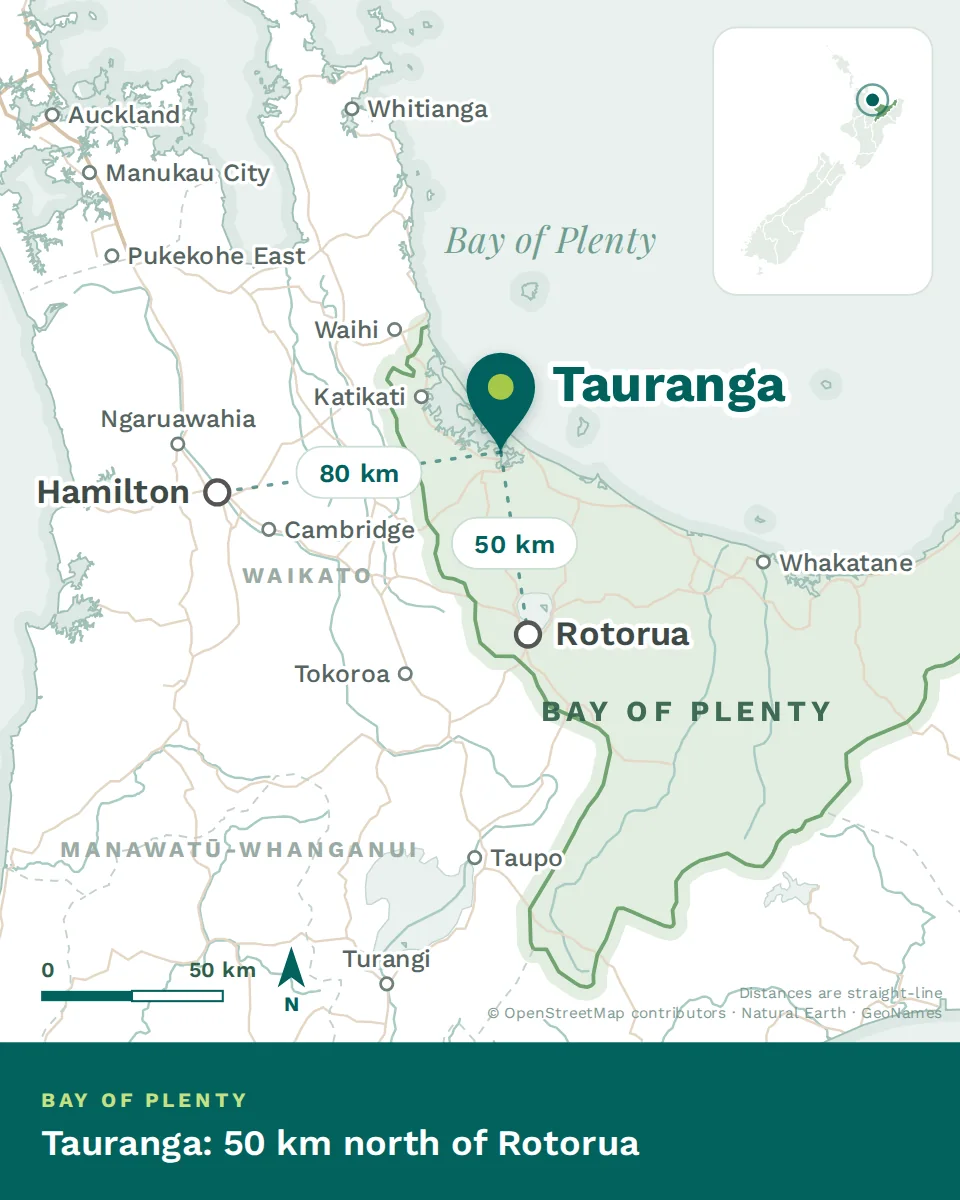
Start at Waihī Beach in the north-west and follow the coast: Katikati and Ōmokoroa on the sheltered inner harbour, then Tauranga itself, wrapped around Tauranga Moana. At the harbour mouth stands Mauao, and beyond it an unbroken run of ocean beach through Mount Maunganui and Pāpāmoa — twenty-odd kilometres of sand in one line.
Inland, Te Puke and the Western Bay are orchard country, rows of kiwifruit under shelter belts. Behind all of it the Kaimai and Mamaku ranges rise into bush, and beyond them the volcanic plateau — Rotorua an hour away, Taupō two.
East of Tauranga the coast keeps going, quieter with every kilometre: Maketū, Pukehina, then Whakatāne and Ōhope, and finally Ōpōtiki and the road to the East Cape. On a clear day you can see Whakaari out to sea, still steaming.
The four seasons
Indicative daytime highs on the coast. Inland and over the Kaimai it is a few degrees cooler and frostier in winter.
What the numbers don’t tell you
The sunshine is the real headline. Somewhere above 2,200 hours a year on this coast, which puts the Bay in a three-way argument with Nelson and Hawke’s Bay for sunniest region in the country. It changes how you live: outdoor eating for eight months, washing dry on the line in winter, and a noticeable seasonal lift in mood that people who have moved from northern Europe talk about constantly.
Humidity, not cold, is the winter problem. Winter days sit in the mid-teens and frost is uncommon on the coast. But the air is damp, and older New Zealand houses were built with more optimism than insulation. Mould and condensation are the standard complaint. Ask about ventilation, extractor fans, a heat pump and the Healthy Homes assessment before you sign — that last one is a legal requirement and covered in the national Renting in New Zealand chapter.
February and March can bring weather from the tropics. Ex-tropical cyclones track down onto this coast some years, bringing a great deal of rain in a short time. The region has good civil defence and clear messaging, and it is worth knowing your route home and where the flood-prone roads are.
Summer is a season and an event. Between Christmas and late January the coastal towns fill. It is enjoyable if you want to be part of it and manageable if you plan around it — locals shop early, book restaurants, and use the less obvious beaches.
Where things are, in driving time
Words you’ll hear
A warm, sunny, north-facing coast with a working harbour, a fast-growing city and a much quieter east. The climate is the reason people come and the damp winter houses are the thing they wish they had asked about. Where you live matters more here than in most regions — Where clinicians live is the next practical read.