

The professions that get
people back to their lives.
Five disciplines, one shared job: function, independence and participation.
Different professions, the same question
Medicine asks what is wrong. Allied health asks what this person needs to be able to do — walk, speak, work, cook, get home. The disciplines answer it differently, and in New Zealand they usually answer it together.
Physiotherapy
Movement, function and rehabilitation, from ICU to sports field — with direct access and ACC funding shaping the private side.
Occupational therapy
Daily living, home and workplace, equipment, cognition and participation — across physical and mental health.
Speech-language therapy
Communication and swallowing, from stroke wards to school classrooms.
Podiatry
Foot health, diabetes-related risk, biomechanics and keeping people mobile.
Dietetics
Clinical nutrition across acute care, community health and long-term conditions.
ACC is why this family’s job market looks different here. New Zealand’s no-fault accident scheme funds treatment and rehabilitation directly — which is why a large private and community sector exists alongside the public one, why physiotherapists see accident patients without a referral, and why “private practice” here often means publicly funded work in a private clinic. Cover is not automatic: it depends on the injury, the treatment and ACC’s approval, and patients often pay a co-payment towards treatment.
It also means more of the week is rehabilitation: funded to get someone back to work and life, not just discharged. How the funding works — worth ten minutes before any interview.
One person’s route back, and where you join it
Take one stroke, or one serious crash. The journey that follows runs through most of this family — and where you stand on it shapes your working week more than your job title does.
The acute days
Early mobilisation, swallowing assessed before the first meal, positioning and discharge thinking that starts on day one.
Physiotherapy · SLT · OT · dietetics · nursing · medicineInpatient rehabilitation
Goal-based multidisciplinary rehab, measured in what the person can do this week that they could not do last week.
The whole family, working to one planHome, adapted
Home visits, equipment, modifications and the family shown how to help — the OT-led step that decides whether discharge holds.
OT · physiotherapy · needs assessmentCommunity rehabilitation
Clinic and home-based therapy, often ACC-funded, with goals that now belong to real life: the school run, the workshop, the marae.
Physiotherapy · SLT · OT · podiatry · dieteticsBack to work & life
Vocational rehabilitation, workplace assessment and staying-at-work plans — a funded outcome here, not an afterthought.
OT · physiotherapy · vocational providersThe discharge summary is the start of this family’s work, not the end of it.
Hospital & community teams
Acute wards, rehab units and district community services — large multidisciplinary teams, collective-agreement pay, and the full range of complexity.
Clinics, providers & contracts
ACC-contracted rehabilitation, private clinics, aged care, schools and occupational health. Public or private is not the same job with a different employer — the funder changes your caseload, your autonomy and how long you have with each person.
Where might that week take you?
Less of it in a hospital than you might expect. Allied health here works wherever the person’s life happens — and the further from a main centre, the broader the caseload.
Hospital & rehabilitation
The clinical core, and where most overseas clinicians start.
Acute wards & ICU
Respiratory physio, early mobilisation, acute swallowing and nutrition — the sharpest end of the family’s work.
Inpatient rehab units
Stroke, neuro, orthopaedic and older-person rehabilitation, run as goal-based MDT programmes.
Outpatient clinics
Booked lists across musculoskeletal, neuro, paediatric, hand therapy and specialist clinics.
Community & ACC-funded
Where New Zealand puts more of this work than most systems.
Community teams
Home-based rehab and long-term-condition support — you drive, you carry your own diary, you see real kitchens and real stairs.
ACC-contracted providers
Accident rehabilitation delivered privately on public funding — a large employer of physiotherapists and OTs.
Often direct access, no referral neededVocational & occupational health
Return-to-work programmes, workplace assessment and injury prevention.
Beyond the ward
Where a working week can look nothing like a hospital job.
Private practice
Independent or group clinics — a different model around caseload, referrals and remuneration.
Schools & child development
Paediatric therapy in classrooms and child-development services — a major SLT and OT employer.
Aged care & dementia
Function, falls, swallowing and nutrition in residential and community aged care — where demand is growing fastest.
Rural & Māori health providers
Generalist scope across kaupapa Māori and rural services, with whānau at the centre of the model.
Now — where do you fit?
The journey is shared; the registration route is not. Four of these professions have their own regulator; the fifth regulates itself through its professional association.
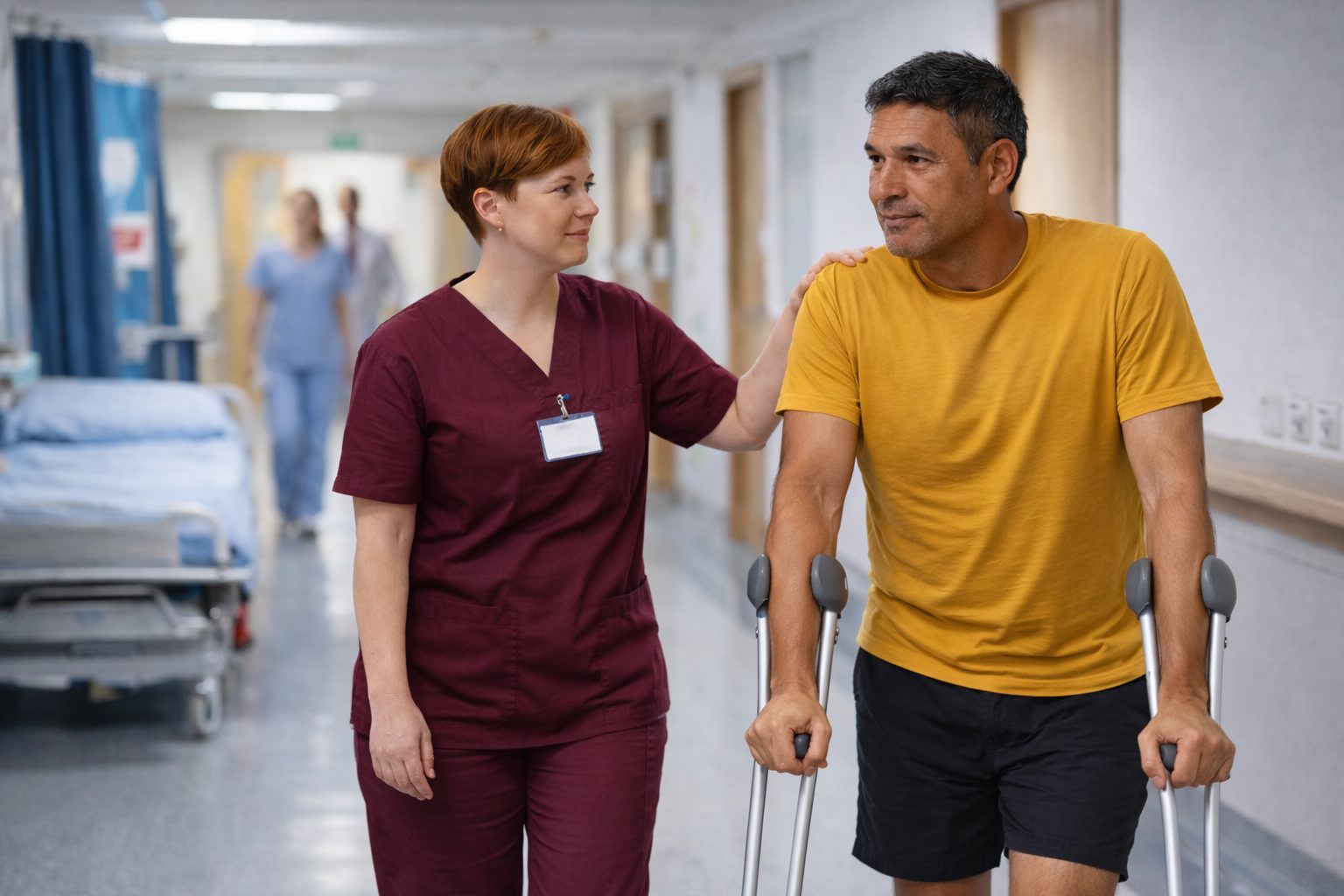
Physiotherapists
Direct access, ACC-funded private work, and an express pathway for several training countries.
Physiotherapy Board of New Zealand
Occupational therapists
Physical and mental health, home and vocational rehab — and some roles advertised profession-neutrally.
Occupational Therapy Board of New Zealand
Speech-language therapists
A self-regulated profession: the New Zealand Speech-language Therapists’ Association holds the professional framework, and most employers require NZSTA membership. Overseas qualifications go through its mutual recognition or qualifications approval routes.
Self-regulated · NZSTA membership is what employers require
Podiatrists
Registered here, but not yet named in the pathway checker — so rather than send you to a tool that cannot answer it, tell us and we will map the route with you. A full career guide is coming.
Podiatrists Board of New Zealand
Dietitians
Pathway available now — the checker gives you the route. A full career guide is coming.
Dietitians BoardAnother allied role
Hand therapists, orthotists, exercise physiologists, therapy assistants. Send us your CV.
Send your CVPsychologists and social workers work alongside this family every day, but their careers are explained with the mental health family, where their registration routes live.
What applies across allied health
The things that are the same whichever of these professions you hold.
Who regulates this work?
Each registered profession has its own board: the Physiotherapy Board, the Occupational Therapy Board, the Podiatrists Board and the Dietitians Board. Speech-language therapy is the exception: there is no statutory register, so the profession regulates itself through the New Zealand Speech-language Therapists’ Association (NZSTA), which holds the professional framework and assesses overseas qualifications. Most employers require NZSTA membership.
Registration is the first gate, and it runs on its own timeline. How registration works · Check your pathway
What does the pay look like?
Public-system pay is set by collective agreement, so your base salary comes from a national scale and not from a negotiation with the hospital. Your step on that scale, your hours and your on-call commitment are what vary. ACC-funded and private work sits outside that and varies with the contract.
Indicative bands sit on each profession’s own guide above. Pay in New Zealand
Which visa would I need?
Most clinicians move on a work visa tied to an accredited employer. Physiotherapists, occupational therapists, speech-language therapists, dietitians and social workers all sit in Tier 1 of the Green List — Straight to Residence — which changes the route considerably. Checked against Immigration New Zealand’s Green List (Appendix 13, in force from 9 March 2026); the list changes, so confirm it against your own occupation before you plan around it.
The visa can usually run alongside registration. Visas and residence
What about the rest of the move?
Schools, housing, healthcare, banking, shipping and the first few weeks each have their own guide.
Guides · resources — the practical side, in order.
Current allied health opportunities
We do not always have a live role in every profession or every region, and we only list what is open.
Find your pathway
Tell us your profession, where you qualified and where you are considering. You will get your likely registration pathway, what it is likely to involve, and what to check before you spend money on anything. Final eligibility is decided by the regulator or, for speech-language therapy, the NZSTA.
The checker answers most of it on its own. If you would rather speak to someone, or you are ready to send a CV, we are here — send your CV.