
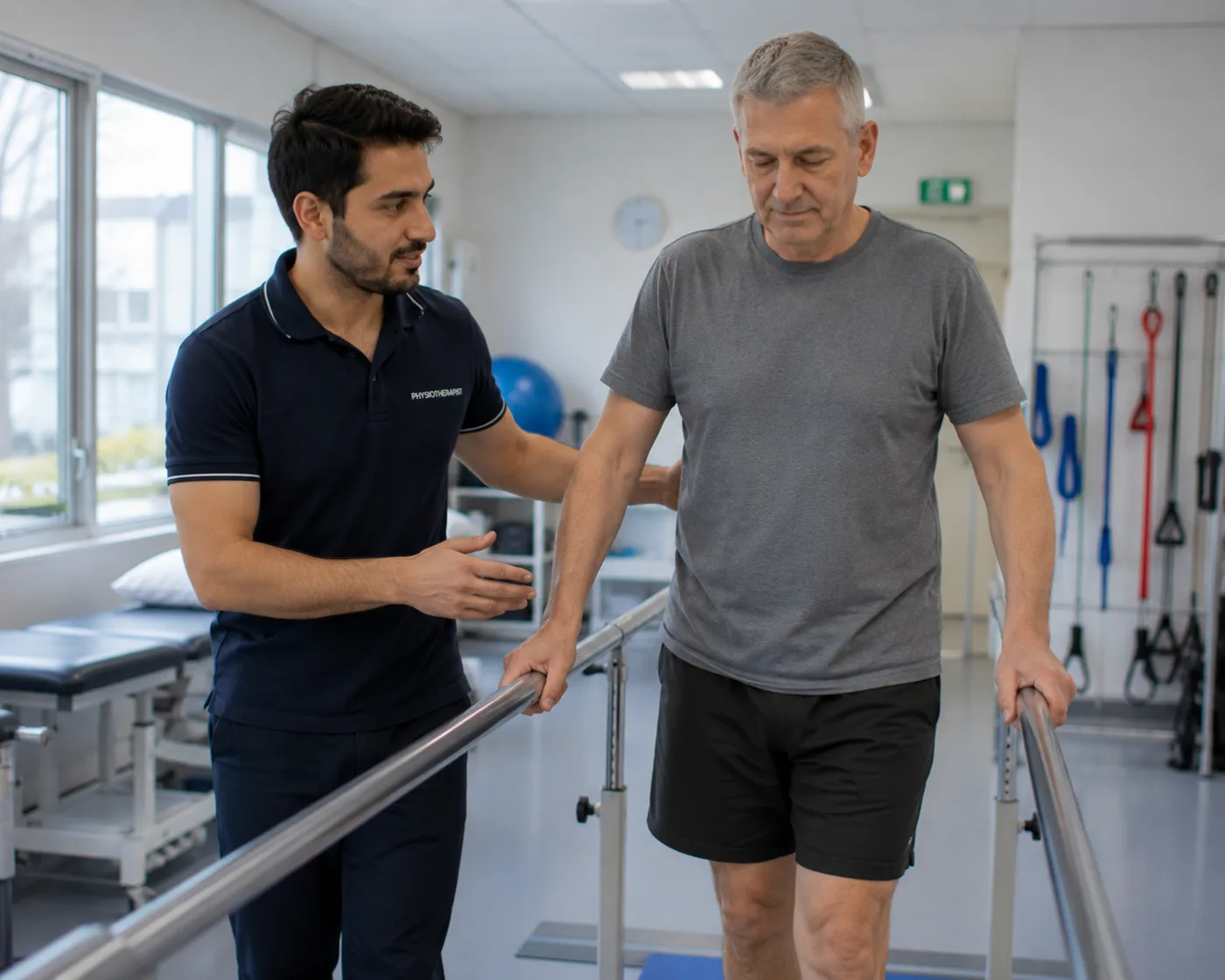
Physiotherapy, with more freedom to practise.
People can come straight to you.
New Zealand’s approach to injury care supports direct access, earlier intervention and greater clinical autonomy.
The way of working is what people notice first.
For physiotherapists the change is the way of working, and you notice it straight away. Much of it rests on the ACC model: with funding in place for injury-related care, you can assess, treat and progress patients without the same barriers you may be used to.
- Smaller, more manageable caseloads
- Clinical autonomy
- A system built around rehabilitation, not delay
Outside work the difference is just as clear: shorter commutes, the coast or the mountains within reach, and a culture where wellbeing is part of everyday life.
Where you could live →
Injury care is funded before you ever see the patient.
ACC covers all injury-related care, so funding is already in place. For physiotherapists that means direct access instead of waiting on a referral, and earlier intervention.
It also means greater clinical autonomy, a return-to-work focus, funded and consistent caseloads, and far less time spent arguing for treatment.
Questions about ACC and billing →
A varied caseload, largely yours to manage.
Your role varies by setting, but most physiotherapists have a varied caseload and, in private practice and ACC-funded services, a high degree of autonomy in how they manage it.
A week covers assessment and treatment across presentations, individual patient-centred treatment plans, rehabilitation and recovery milestones, close collaboration with multidisciplinary teams, and long-term relationships with patients in the community.
Scope of practice →
The essentials, in five minutes
Seven questions people ask before they decide. Open the ones that matter to you.
Can I work there?Yes, three to six months, typically
You register with the Physiotherapy Board of New Zealand, which assesses your qualification, clinical experience and competency — clinical care, communication and professional practice — and then you hold an Annual Practising Certificate. For most internationally trained physiotherapists it is simpler than it first appears.
How registration works →What could I earn?Around NZ$78,000–$118,000
Indicative, on the ten-step APEX Physiotherapy scale for public, community and rehab roles, current to 31 January 2027, with steps 1–7 rising automatically each year. Clinical lead and advanced practice sit on the designated scale, indicatively circa NZ$113,000–$154,000. Private and ACC-funded work is outside the agreements entirely.
How pay is set →Where are the jobs?Public, private and ACC-funded
Hospital, community and rehabilitation roles across the public system, plus a substantial private and ACC-funded MSK market. Demand is broad enough that where you live is usually your decision rather than the vacancy’s.
See current roles →What will the work be like?Patients can see you directly
The ACC scheme covers all injury-related care, so the funding is already in place before the patient reaches you. In practice: direct access instead of waiting on a referral, earlier intervention, greater clinical autonomy, a return-to-work focus — and far less time spent arguing for treatment.
The ACC model →Can I bring my family?Yes, most people do
Partners and children can usually join you on visas linked to yours, and partners can usually work. Schools, childcare and the family logistics are explained once, properly, in the family guide.
Family moves, explained →What will moving cost?Budget for real fees
Board registration and your first practising certificate, qualification verification, police clearance, visa fees for everyone moving, flights and shipping. Some employers contribute to relocation, some don’t — we get whatever is offered in writing.
The move, costed →How long could this take?Three to six months for registration
That is the Board’s typical range for an internationally qualified applicant, and the visa runs largely alongside it. Document verification and evidence of recent practice are the usual bottleneck, so start collecting them before you apply.
The journey, sequenced →Current opportunities
Roles we're recruiting for right now. If none is quite right, register your interest and we'll be in touch when something fits.
The detail, when you want it
Registration, pay, the work itself and life outside it. Everything is here, one section at a time.
Getting registeredRegistration overview
Reviewed July 2026 · checked against the Physiotherapy Board of New Zealand’s current published guidance
To practise in New Zealand you'll register with the Physiotherapy Board of New Zealand. For most internationally trained physiotherapists the process takes around three to six months, and is simpler than it first appears.
The Board assesses your qualifications, clinical experience and overall competency against New Zealand standards, including clinical care, communication and professional practice. As part of the process you'll typically need:
- Verification of your qualification
- Evidence of recent clinical practice
- A police clearance
- Confirmation of English-language proficiency, if required
Once registered, you'll hold an Annual Practising Certificate (APC), which allows you to work legally. We support you through each stage, from understanding your pathway, to preparing your application, to securing the right role once you're registered.
Registration pathways
Your route depends on where you trained and how closely your experience aligns with New Zealand standards.
Internationally Qualified Pathway
The most common route for physiotherapists trained outside New Zealand. Your qualifications and experience are assessed against local standards, sometimes including additional assessment or a short period of supervised practice before fully independent work.
Express Pathway
For physiotherapists trained and practising in recognised comparable countries. More streamlined, though you'll still meet the Board's core competency requirements.
Your registration resources, all on one page
Read the Board's own registration guide, work through our step-by-step checklist with application notes, then go straight to the people who register you. These cover registration only — visas and relocation are handled separately.
Prefer a download? Registration guide · Checklist
Scope of practiceYou begin with a broad, flexible foundation
Every physiotherapist in New Zealand, wherever they trained, begins under the General Scope of Practice. It is where everyone starts.
It's broad and flexible, covering private practice, rehabilitation, hospital settings and community care, giving you space to establish yourself and build confidence in how things work locally. Most physiotherapists spend the majority of their careers within this scope, particularly in private and ACC-funded settings. In practice, that means managing your own caseload, making independent clinical decisions, and owning patient outcomes.
Broad, flexible practice across private, rehabilitation, hospital and community care, managing your own caseload with full clinical independence.
A higher level of clinical responsibility within a defined area: more complex cases, leadership responsibilities, and contributing to service development and mentoring.
The highest level of clinical practice: highly complex caseloads, expert input, and often contributing to education, research or service design within a field.
Progression is based on experience, further development and demonstrated capability within the New Zealand system.
Salary & benefitsWhat you can expect to earn, and what comes with it
Public and community physiotherapy pay is set under the APEX Physiotherapy collective agreement — a transparent 10-step scale, with steps 1–7 rising automatically each year (current agreement runs to 31 January 2027). Private and ACC-funded work varies with caseload and experience. View the APEX agreement →
Health New Zealand hospital, community and rehab roles on the ten-step APEX scale, current to 31 January 2027.
Set by the clinic
ACC-funded MSK and private practice sit outside the collective agreements entirely, so there is no scale to check a figure against. Earning potential grows with caseload and experience — we talk through real numbers for the specific role.
The designated-physiotherapist scale: clinical lead, advanced practice and specialist roles.
Beyond salary
- Annual leave: four weeks' paid leave is the legal minimum, and many roles offer more.
- Sick leave: paid sick-leave entitlements, with many employers offering above the minimum.
- KiwiSaver: New Zealand's workplace retirement scheme, with employer contributions on top of your pay.
- CPD support: funded continuing professional development is common, particularly in public and larger providers.
- Professional development: study leave, course funding and progression support where available.
We'll always be straight with you about pay and conditions for a specific role, including how the cost of living in that location compares.
Life beyond workThe page so far is about the work. This part is about the life.
For most people, the move is about more than a job. Here is what daily life can feel like.
Time that's yours
Manageable caseloads and a culture where finishing on time is normal, not exceptional.
Space to raise a family
Good schools, safe communities and the outdoors on the doorstep.
Coast and mountains, close
Beaches, bush and ski fields are often a short drive, part of everyday life, not just holidays.
Welcoming and close-knit
Smaller communities make it easier to settle in and feel part of something.
Shorter, calmer journeys
Outside Auckland especially, commutes are typically short: minutes, not hours.
A steadier pace
A calmer rhythm to the week, with more room for the things that matter.
From experienceWhat physiotherapists tell us
A few themes that come up again and again, from the people who've made this move.
How much clinical autonomy they have, how quickly they're trusted, and how manageable the caseloads feel compared with what they left behind.
Whether their experience will be recognised, how registration really works, and how the family will settle. Almost always, these ease once there's a clear plan.
That the adjustment was shorter than expected, the lifestyle change was real, and the main regret was not doing it sooner.

Most physiotherapists we speak to are unsure at first how their experience will translate. In reality, the transition is usually very smooth: the standard of physiotherapy in the systems most people come from aligns closely with New Zealand. The differences are mostly in how the system is structured, not how you practise.
There's often a short adjustment at the start. For some it can feel like a small step back, but it's really just about building confidence in a new system and getting familiar with ACC. That phase is usually brief, and physiotherapists tend to progress quickly into highly autonomous work.
SophieFounder, Ethicare Resourcing
What we can’t promise
Three things we won’t guarantee, and what we do instead.
Timelines that aren’t ours to give
Registration sits with the Physiotherapy Board and visas with Immigration New Zealand. We’ll give you the likely range, keep your file complete and moving, and chase what can be chased — but we won’t quote a faster number just to win you over.
A specific job in a specific suburb
Vacancies move. If your heart is set on one workplace in one corner of one city, we’ll tell you plainly how long that wait could be — before you resign anything, not after.
That the move is right for you
Some moves shouldn’t happen. If the scope, the pay maths or the family logistics don’t stack up, we’ll say so plainly.
Frequently asked
Private and ACC clinics, or the public system — which should I be looking at?
This is the real decision, and it matters more than most people expect. Private and ACC-funded clinics give you the most autonomy soonest: your own caseload, mostly musculoskeletal, direct access, and earnings that move with how busy you are. Health New Zealand roles give you complexity and structure instead — inpatient and community rehabilitation, neurology, respiratory, older persons' health, paediatrics, rotations, and a clearer ladder with funded development alongside it.
Plenty of physiotherapists do both over a career, and moving between them later is normal. Tell us how you like to work and what you want to be good at in five years, and we'll be straight with you about which fits.
Do I need to be an ACC provider myself?
Not as an employee. Clinics hold the ACC contract and you treat under it, so the billing and reporting sit with the practice rather than with you personally. What does land on you is the documentation: injury claims, treatment rationale and progress reporting are part of the working day, and they are how funded treatment gets approved and continued.
It is simple once you have seen it a few times, and any decent clinic will walk you through their systems in your first fortnight. If you ever go on to run your own practice, becoming a contracted provider is a separate step and we can point you at the right people.
I've specialised in neuro, respiratory or paediatrics rather than MSK. Is there work for me?
Yes — but be realistic about where it sits. Specialist non-musculoskeletal work is concentrated in hospital services and the main centres, so if neurological rehabilitation or paediatrics is what you want to keep doing, your location options narrow. There is real demand, and specialist experience is valued; there are simply fewer posts and they turn over less often.
Provincially, the volume is musculoskeletal and ACC-funded. Many people arriving with a specialist background take a broader role first, then move back towards their area once they know the system and the people. Say early on if your specialty is non-negotiable — it changes which roles we put in front of you.
Will my current banding or seniority carry across to the pay scale?
Relevant experience is normally recognised, but it is not a direct band-to-step conversion. Public and community roles sit on the APEX physiotherapy scale, and where you start on it is assessed by the employer against your experience and the agreement's own criteria — not by mapping an overseas grade onto a New Zealand one. Private and ACC clinics work differently again, with earnings shaped by caseload as much as by starting rate.
Our job is to get your starting point confirmed in writing before you accept anything, alongside what that means in the town you'd be living in. We won't guess at a number to make a role sound better than it is.
How different is the way physiotherapy is practised?
The clinical knowledge transfers almost entirely. What tends to shift is emphasis. Practice here leans strongly towards active rehabilitation, education and self-management — getting people moving, understanding their injury and taking the work home with them — rather than long courses of passive treatment. If you come from a hands-on tradition, expect to use those skills as part of a plan rather than as the plan.
Cultural safety is also treated as core clinical practice, not an add-on. Understanding Te Tiriti o Waitangi and how it shapes health care, and working respectfully with Māori and Pacific patients and their whānau, is part of what the Board expects of you and part of what makes you good here. Nobody expects fluency on day one; they do expect you to take it seriously.
Can I locum, work part-time, or split my week between clinics?
Part-time is common and generally easy to arrange. Locum and multi-clinic work is more complicated at first, and the reason is the visa rather than the profession: an Accredited Employer Work Visa ties you to one accredited employer and a specific role, so stitching together shifts across several practices usually isn't possible until you have residence.
Once you're a resident, the flexibility opens right up and a lot of physiotherapists do build a mixed week. If flexibility is the whole point of the move for you, tell us at the start — it shapes which visa route and which employers make sense.
What would you do with more time per patient?
Relocating to a new country can feel overwhelming at times, and you won't be doing it on your own. Find your registration pathway in two minutes, then send us your CV and we’ll take it from there.