
Hire the clinician. Keep the clinician.
Permanent international placements for New Zealand and Australia, built to last.

A small, deliberate number of placements is what lets one person stay accountable for each move, from first call to first year.
Three questions, three answers
Can we hire internationally at all?
What decides it, a likely timeline, and the professions we know well — plus the toolkit for the detail.
What it takes → Who's out thereWho’s out there?
Candidates verified against their board, and where each of them stands today.
Who we’ve got → Whether they stayWill they stay?
Retention is the work we are built around.
How retention holds →Can we hire internationally at all?
Almost always yes, if it is a role a board will register and the timeline is workable. Four things decide it.
Registration decides everything after it
Whether the clinician can register with the relevant board sets the visa, the start date and the offer. We check it before anyone’s time is spent.
See the registration checker →The visa follows the pathway
Once the board route is clear, the work visa follows a known process. We sequence it and keep the file moving; the decisions stay with the immigration authority. This is coordination, not immigration advice.
A likely timeline
Across the placements we have made, offer to arrival has usually fallen between five and nine months. It varies by profession, by board and by where the clinician is coming from, so we tell you where your role is likely to sit before you commit.
Supervision and accredited posts
Some boards expect a supervised period, or a post that meets an accreditation standard, before a clinician can work unsupervised. Knowing this before you advertise avoids an appointment that cannot start.
Planning & governance →The professions we know well
A defined list, in two countries. If your role sits close to these, ask — you’ll get a straight answer either way.
New Zealand Profession-specific boards
- Sonographers General and cardiac scopes
- Radiographers & medical imaging technologists
- Radiation therapists
- Consultant radiologists
- Physiotherapists
- Occupational therapists
- Psychologists
- Anaesthetic technicians
- General practitioners
Australia Ahpra — or ASAR for sonographers
- Sonographers
- Radiographers
- Radiation therapists
- Consultant radiologists
- Nuclear medicine technologists
Australia is the newer of our two markets, currently medical imaging and radiation therapy.
The employer’s international recruitment toolkit
Eight chapters on doing this well and making it last — a sustainable workforce, ethical sourcing, planning, the registration programme, relocation, belonging, retention and what to measure. Written from inside the health service and every move we’ve supported.
Who’s out there?
Ask us. We can tell you who we are already talking to in your profession and region, and exactly where each person stands on registration.
How candidates are assessed
- Verified against the board — profession, registration route and stage, so “available” means a date.
- A start date read from the process, not from optimism.
- The regions they would move to, so a shortlist fits the posting.
- The household — a partner’s work, children’s schooling, the questions that decide whether a family settles.
How introductions work
- One named person at a time, with their consent.
- Contact details released only on acceptance.
- Nothing is shared beyond the conversation, and every tool stays free to the clinician, however they got their job.
Tell us the role and the region and we will answer personally.
Ask who we’ve got →Will they stay?
Retention is a relocation question, and it is the work we are built around.
“Sophie always puts candidate care first, and has invested heavily in preparing candidates for a successful move — ensuring they have as much support as possible when relocating to a new country.”
Maree LoynesFormer Allied Health Recruitment Specialist, Health New Zealand MidCentral
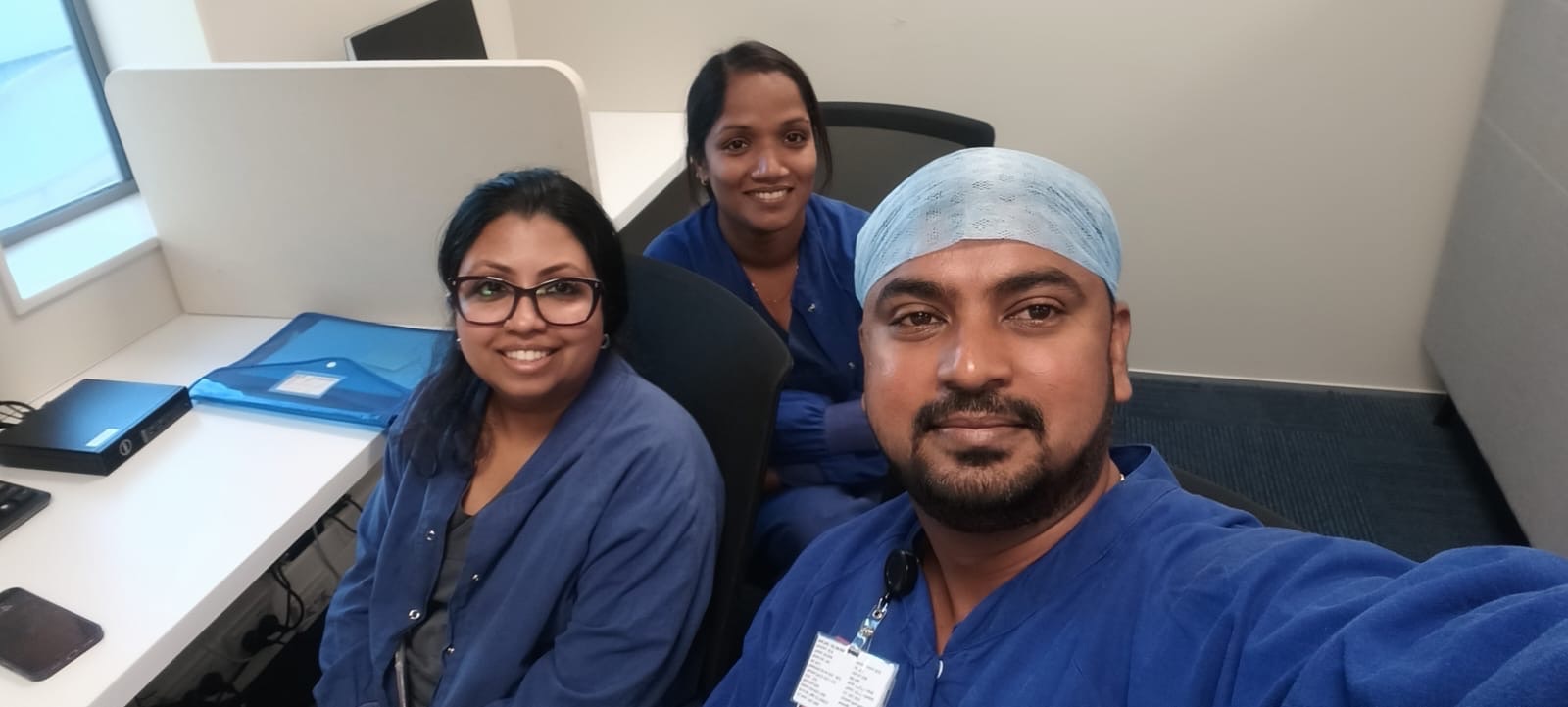
A regional allied health role that had stayed open
A regional allied health service, one role open long enough that the gap had started to feel normal. Local advertising hadn’t moved it, and the location was never going to sell itself from a job description alone.
A small, targeted search. The decisive conversations weren’t about the role: where the candidate stood with the board, what their partner would do, and whether the timeline was realistic for a family.
Registered, relocated and still in post — so the service filled a role it had stopped expecting to fill, and didn’t have to run the whole process again a year later.
Why it holds: we don’t stop at arrival
The first year is where a placement is won or lost, so it’s where we stay — personal coordination of registration, visa and the move itself, then contact through settling in: the bank account, the GP, the school place, the fortnight when a family wonders whether they got it right. For clinicians we place it’s included as standard; for your direct hires it’s available by arrangement.
Retention & belonging, in the toolkit →What happens after you send us a role
No auto-responder, no silence. A person reads it — usually a reply within a working day, and a clear answer on whether we can help before either of us spends real time. Then, if it’s a fit, the search runs like this, with one person accountable throughout.
We reply
Within a working day: whether it’s a role we can fill, and a likely timeline. If it isn’t, we’ll say so.
Understand the service
Your team, your constraints, the supervision you can offer and what the role really needs.
Search & qualify
A targeted search, then the conversations that decide whether someone is a candidate.
Registration & move readiness
Where they stand with the board, the visa and the practicalities of moving a household.
Shortlist & offer
A short, relevant shortlist prepared for your process; then offer, registration and visa run in parallel.
Aftercare
We stay in contact after arrival, because the first year is where retention is decided.
Built from inside the health service.
Ethicare was founded by Sophie Careem, previously a Senior Service Improvement and Transformation Manager at the Royal Free London NHS Foundation Trust — work that was about why services can’t fill roles, what long-term gaps do to teams, and which changes hold.
So we talk about vacancy pressure, supervision capacity and team stability. You deal directly with the people who know the candidates; clinical governance sits with two senior clinicians.
International recruitment works when it’s treated as workforce transformation, not a transaction.Sophie Careem · Founder
 Sophie CareemFounder. Former NHS service improvement & workforce transformation, Royal Free London.
 Prof Alastair SutcliffePaediatrics, UCL & Great Ormond Street Hospital.
 Dr Jude A. ObenHepatology, King’s College London.
Tell us what you’re trying to solve.
One difficult vacancy, a specialist search, or the workforce gap behind it. Tell us, and a person will reply.
- A person reads it, usually within a working day.
- Whether we can help, and roughly how long it would take.
- Nothing shared beyond the conversation, and no commitment either way.
Recruiting directly and want help with a relocation offer of your own? Tell us in the form.
Looking for a healthcare role? Start at current opportunities.
Six fields. A person reads it — usually a reply within a working day, with a clear answer on whether we can help.