

If you care about food, this is the chapter that will decide it. Hawke’s Bay has the strongest food and wine culture of any region in this collection, and it is not a tourism claim — it is the everyday consequence of hot summers, good soil and a hundred and fifty years of growing things.
The wine
Hawke’s Bay is New Zealand’s oldest wine region and, for reds, its best. The Gimblett Gravels — a defined stretch of old riverbed near Hastings — produce syrah and Bordeaux-style blends that stand comparison with anywhere. The region’s chardonnay is widely held to be the country’s finest.
What matters day to day is that the cellar doors are twenty minutes from your house, most of them are free or nearly so to visit, and the wine costs less here than in a Wellington shop. Sunday lunch at a vineyard stops being an occasion and becomes a habit.
The food
This is the fruit bowl of New Zealand: apples, pears, stone fruit, berries and squash off the Heretaunga plain, sold at orchard gates and roadside stalls through the season. Olive oil, cheese, cider and honey are all made locally and well.
The Hastings farmers’ market on a Sunday morning is, by fairly broad agreement, the best in the country — producers rather than resellers, and half the region there. Napier has its own on Saturdays. Between the two you can eat almost entirely from within thirty kilometres, and eat extremely well.
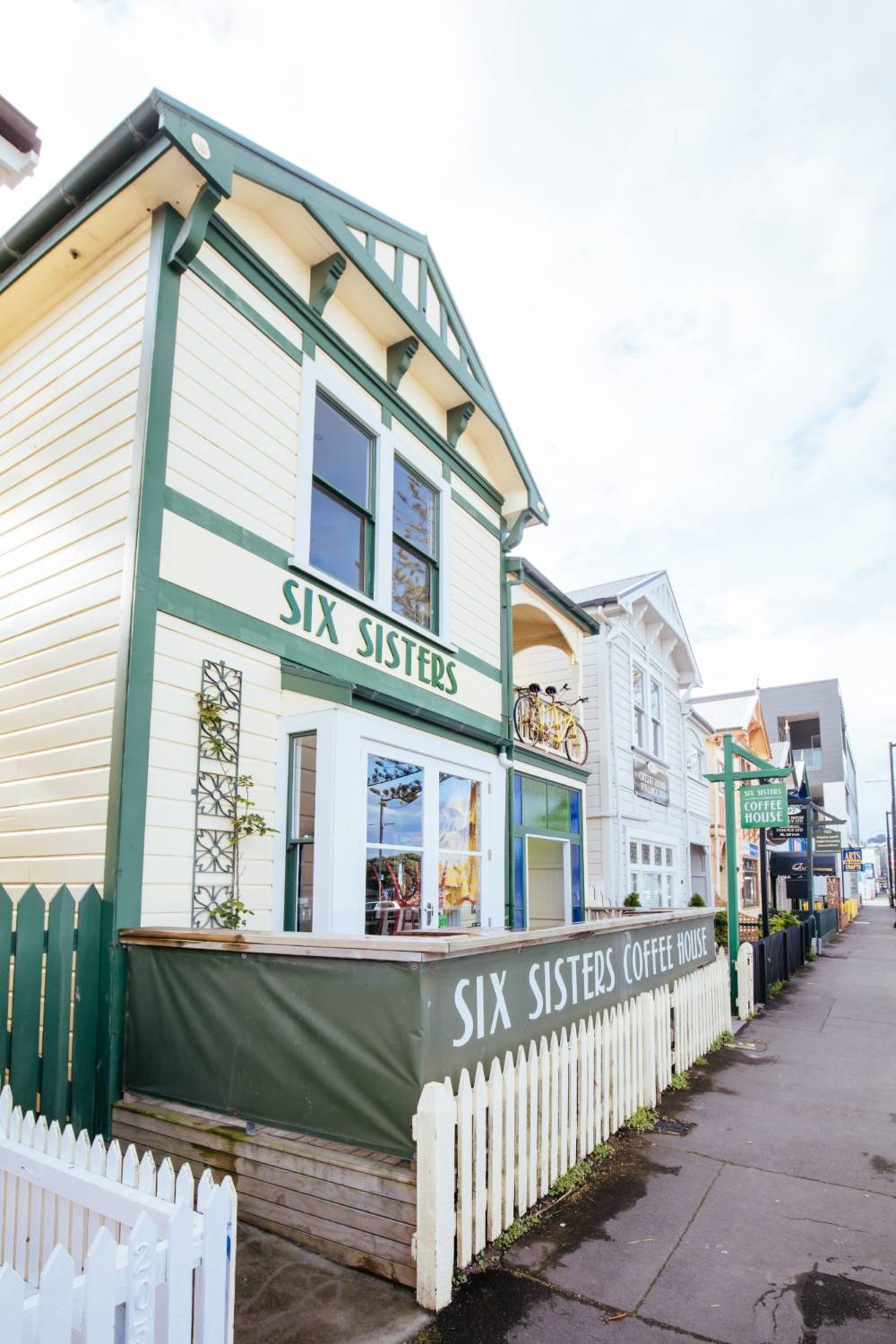
Eating out
Groceries and the practical stuff
All the main supermarket chains, in both cities, plus large-format retail. Food in New Zealand is expensive by British or Australian standards — national rather than regional — but the fresh produce here is the exception, and it is a real one.
For specialist ingredients: there are Asian, Indian and Pacific grocers across both cities, a good range of halal options, and specialist butchers and delis. It is not Auckland. If a particular cuisine is central to how your family eats, check before committing — the national chapter Finding your feet & your people covers where to look and which communities are established here.
The rhythm of the year
- Retail is good for the size but not deep. Big shopping trips mean Wellington, Auckland or online.
- Touring music, theatre and major exhibitions mostly stop at Wellington or Auckland. The Napier Municipal Theatre and the region’s festivals fill some of the gap.
- Very specific imported groceries can need ordering in. Most people build up an Auckland order a few times a year.