

Melbourne’s first question is the river: north or south. The second is whether you need Melbourne at all — because Victoria’s regional cities make the strongest live-regional case in Australia, with commuter trains to prove it.
Melbourne’s oldest argument, put to work. The columns share trains, trams and prices — what differs is the texture of a Saturday.
Northside
- The culture beltGig rooms, galleries and the densest café streets in the country, from Fitzroy out through Brunswick.
- Value on the same linesThe middle ring keeps the train and drops the price — the gentrifying edge is visible block by block.
- Green out eastThe Yarra corridor threads parkland from Ivanhoe to Eltham for the family-scaled version.
Southside
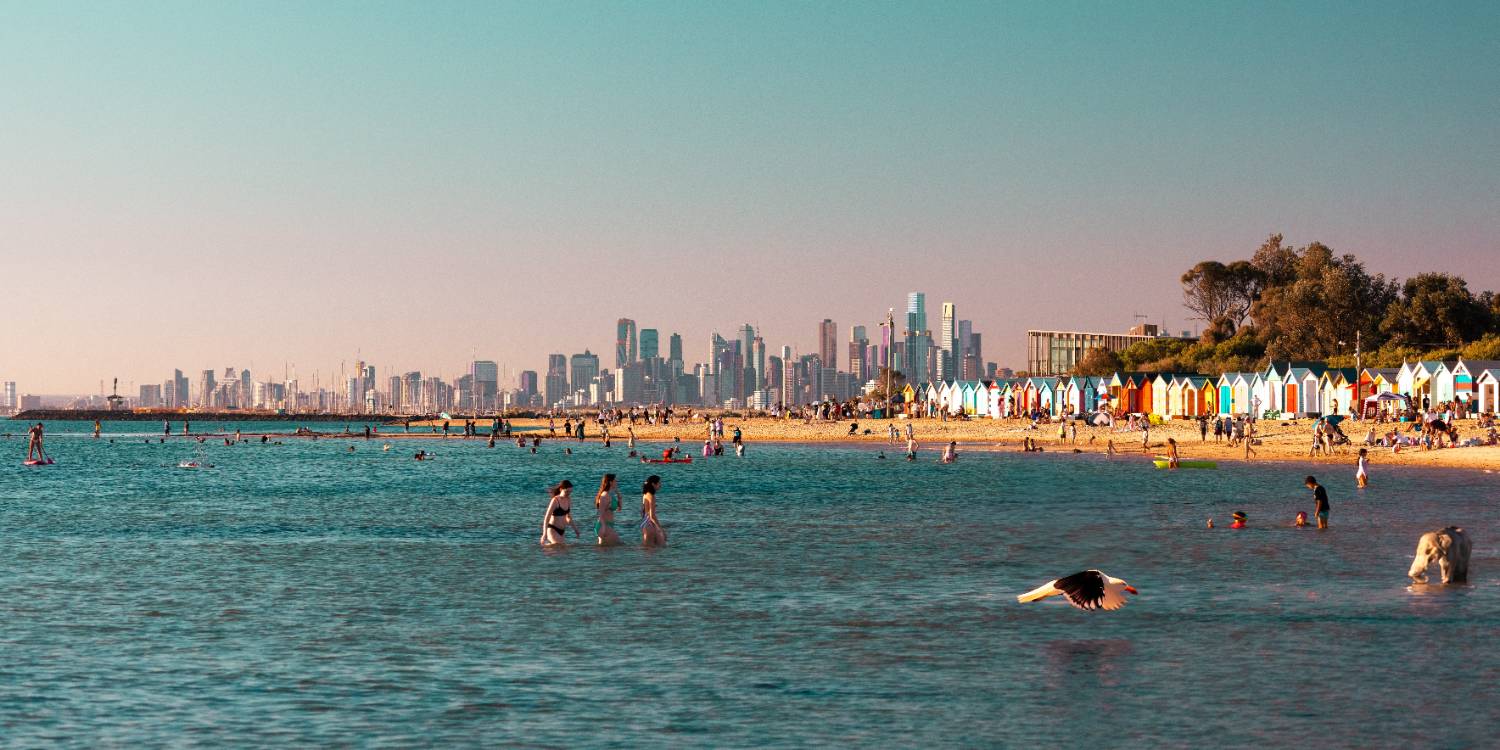
- The bay in daily lifeSand, sailing clubs and sea baths from St Kilda around to Mordialloc.
- The education spineThe south-east belt concentrates the most chased school zones in Victoria, and charges for them.
- The peninsula doorFrankston opens onto weekend coast — longer commute, more house, beach at the end.
And the third answer: no state makes regional living easier to say yes to, commuter trains included — the regional cities get their own section below.
Northside
The inner north
Fitzroy, Brunswick, Northcote, Thornbury — terraces, live music, the best coffee density on earth, and trams everywhere. Couples’ territory; family houses at serious prices.
The middle north
Preston, Reservoir, Coburg — the value ring on the same train lines, more mixed and more affordable, gentrifying visibly.
The north-east
Ivanhoe to Eltham along the Yarra — leafy, riverine, family-scaled, with parkland trails into the city.
Southside and the bay
The inner south
South Yarra, Prahran, St Kilda — bayside energy, nightlife and apartments. St Kilda’s beach-suburb revival keeps it the international landing pad.
Bayside proper
Brighton to Mordialloc — beach-box postcards, sailing clubs, school zones and prices to match. The family-by-the-bay dream, costed accordingly.
The south-east spine
Caulfield through Glen Waverley — the school-zone belt, deeply multicultural, on solid train lines. Where education-first families concentrate.
The Mornington side
Frankston and the peninsula approaches — beaches, newer estates and better value, trading commute length for coastline.

The west
The inner west
Footscray, Yarraville, Seddon — Melbourne’s best value inside ten kilometres, Vietnamese and East African food strips, and rising fast.
The growth corridor
Point Cook to Werribee and beyond — new estates, new schools, new hospitals, hot summers. Most house for the money in metropolitan Melbourne, and the region’s health services recruit constantly.
The regional cities — Victoria’s quiet best answer
Geelong
The second city: a major health service, waterfront revival, the surf coast twenty minutes away, and Melbourne an hour by train. The full compromise-free option.
Ballarat
Gold-boom architecture, a major regional hospital, cool climate, and family houses at a fraction of Melbourne money — on a commuter line. Sophie’s most-repeated recommendation.
Bendigo
Ballarat’s warmer twin — another gold city with a major hospital, a thriving arts scene, and the same train-line logic.
The surf coast & Bellarine
Torquay, Ocean Grove, Barwon Heads — beach-town living inside Geelong’s commute, priced for the privilege but far below bayside Melbourne.
Gippsland & the east
The Latrobe Valley’s hospital towns, then lakes and forest to the far east — the state’s most affordable family housing, with regional incentives.
The north & the Murray
Shepparton’s regional hub, Echuca and the river towns, Mildura in the far north-west — rural medicine and community standing.
Three things to check before you sign
- The train line, not the distance. Melbourne liveability is line-shaped: twenty kilometres on a good line beats ten in a tram-less gap. Test the actual timetable at your shift hours.
- The school zone, at the exact address. Zone boundaries move Melbourne property prices by six figures — and on a temporary visa, read the master’s School fees on a visa first.
- Heating and insulation. Victorian winters are indoor events. Period charm without a working heater is a July mistake; ask before signing — see Living in Australia.
Most clinicians we move rent for six to twelve months first — long enough to pick a side of the river, or to discover that Geelong or Ballarat was the answer all along.