
Victoria compresses a continent’s variety into Australia’s smallest mainland state: a sheltered bay, a wild surf coast, gold-rush cities on the plains, alpine country that snows, and the Murray marking the top edge. Nothing is more than a long morning’s drive from Melbourne.
The shape of the state
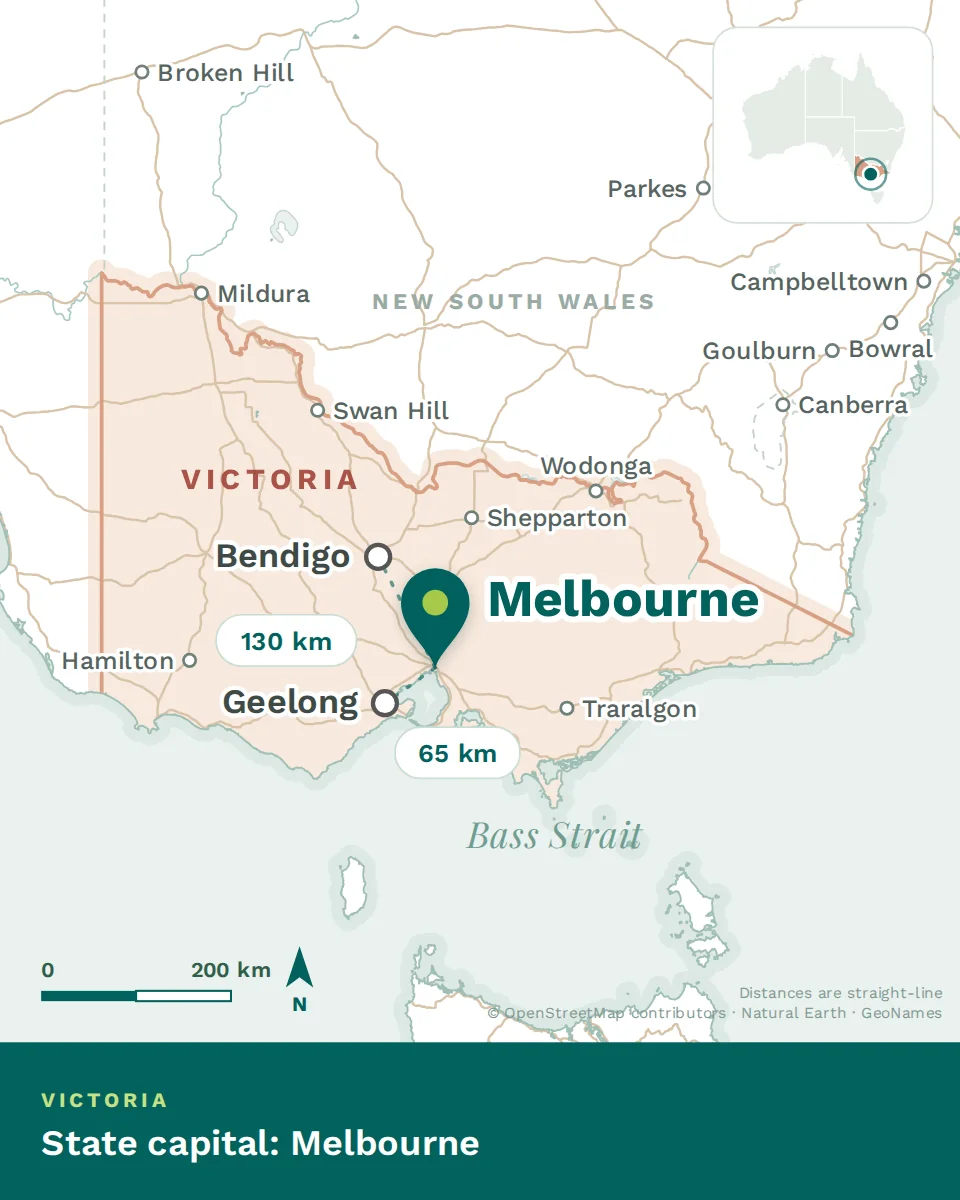
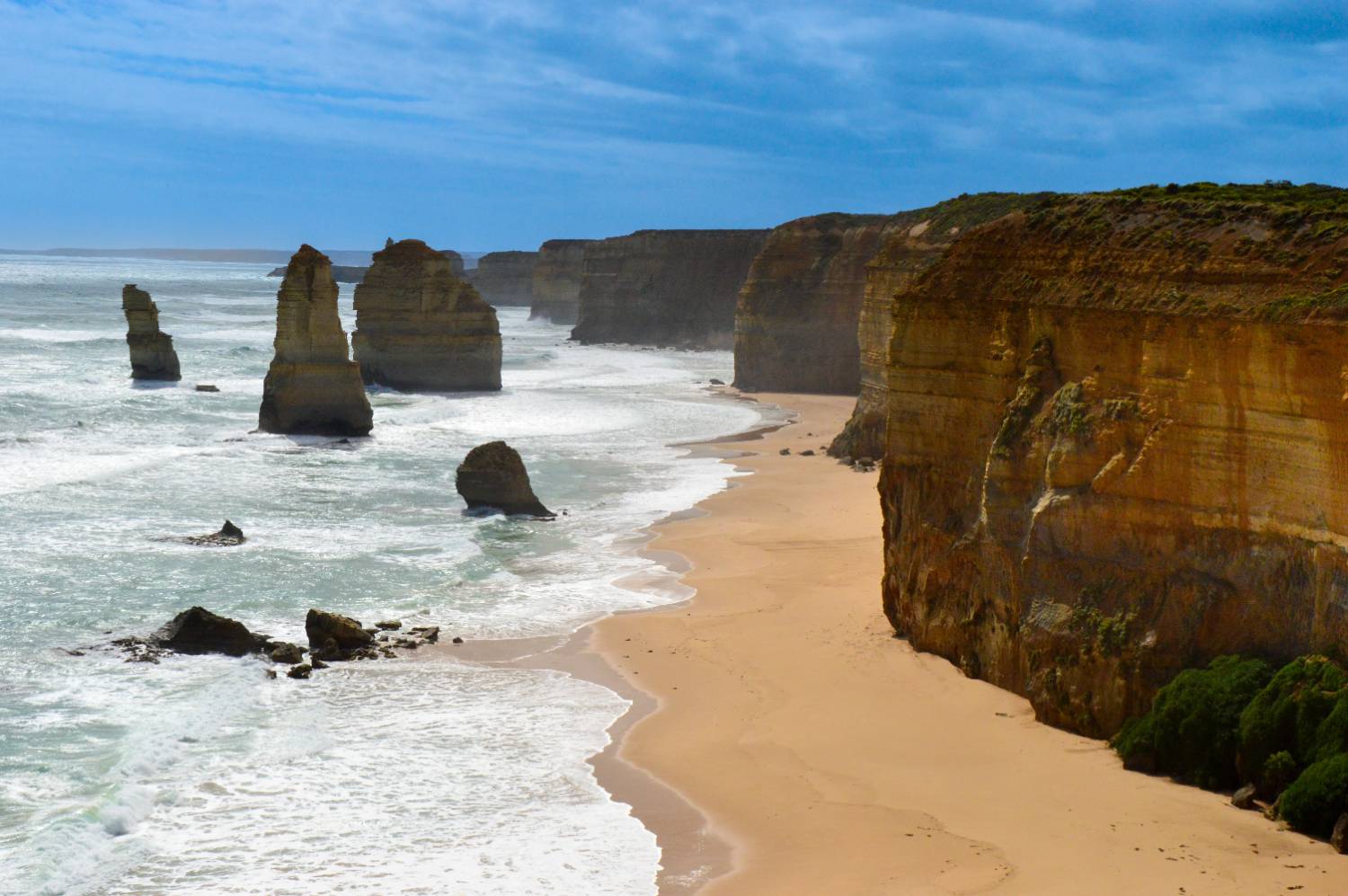
Port Phillip Bay is the anchor: Melbourne wraps its top, Geelong its western shoulder, the Mornington and Bellarine peninsulas its heads. The bay is calm, swimmable and ringed with beach suburbs; the true surf starts beyond the heads, on the Great Ocean Road running south-west past Torquay and Bells Beach toward the Twelve Apostles.
Inland and west sit the goldfields — Ballarat and Bendigo, Victorian-era cities built on 1850s gold, now regional health hubs — and beyond them the wheat plains and the Grampians’ sandstone ranges. North, the state slopes to the Murray River and its border towns. East rises the high country: Victoria’s Alps, with ski villages in winter and cattle-country trails all summer, falling away to Gippsland’s lakes and forests in the far south-east.
The four seasons, in Melbourne
Indicative Melbourne daytime highs. The goldfields run colder in winter with real frosts; Mildura and the north-west run hotter all summer; the Alps do actual snow.
What the numbers don’t tell you
Four seasons in a day is logistics, not folklore. A 35-degree northerly can hand over to a 19-degree southerly change within an hour. Melburnians dress in layers, carry the compact umbrella, and check the radar like a vital sign. You will too, quickly.
Summer’s heat arrives in spikes. Most of it is pleasant and dry; a handful of days a year run past forty, and those are also the fire-risk days. The warning systems are excellent — download the app, learn your district, and take total-fire-ban days seriously, especially regional.
Winter is an insulation problem. Thirteen degrees outside with single glazing means cold inside. Newer builds and renovated places are fine; charming period terraces are charming and cold. Ask about heating before signing — the master’s Living in Australia covers what to check.
The UV still bites. Grey-sky sunburn is a Victorian speciality. The slip-slop-slap rules apply here as everywhere in Australia, all year.
Where things are, in travel time
Words you’ll hear
A compact state where everything is a weekend: bay, surf, goldfields, wine, snow. The climate is the one fair complaint — grey winters and four-seasons days — and the compact map is the compensation. Where clinicians live is next.