

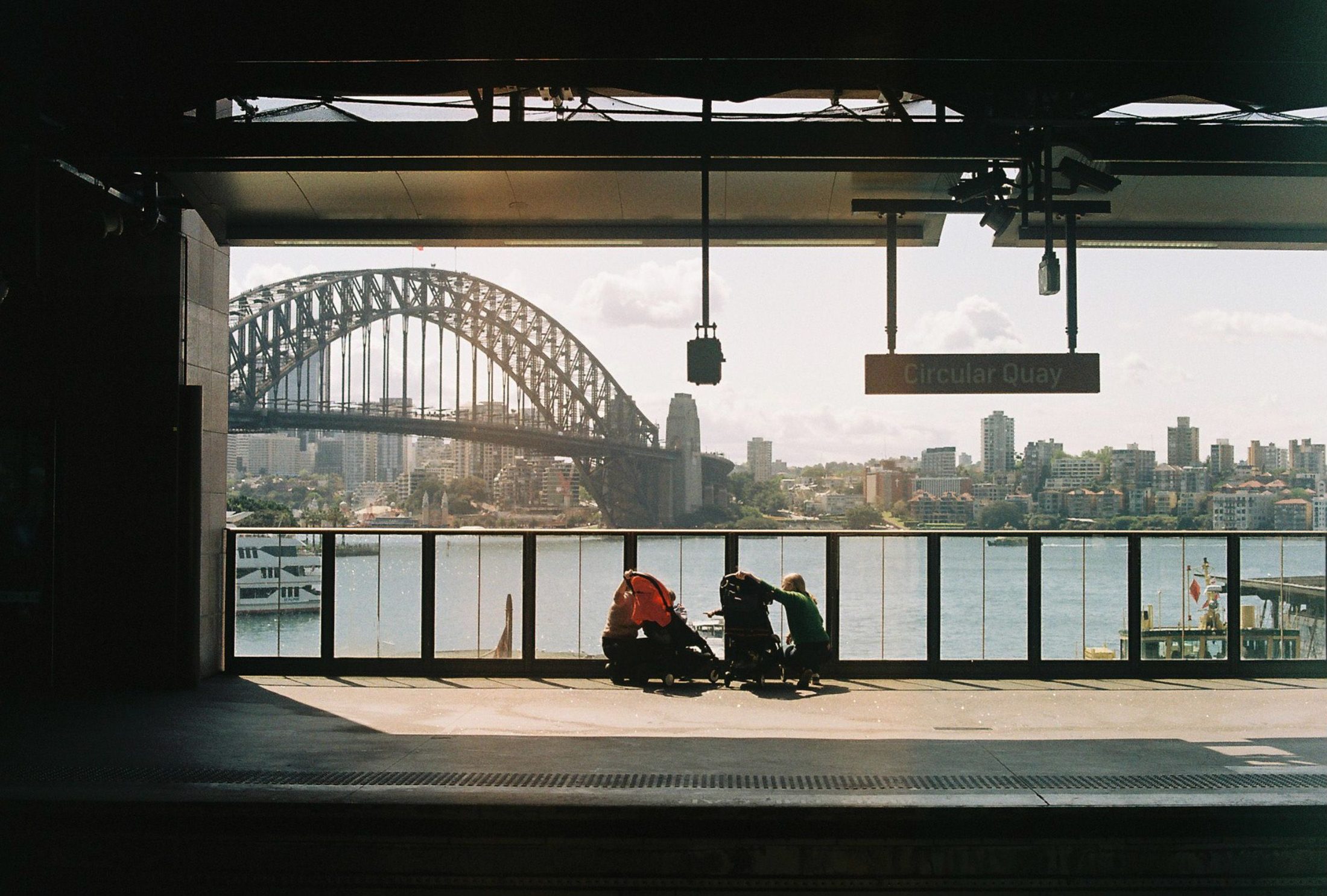
Sydney’s public transport is better than visitors expect and its traffic is worse. The rail network is extensive, the ferries are a pleasure, and the driverless metro is steadily changing the city. The rule here: live near a station, or accept the commute.
The network, in four parts
Car-free life is practical near a train, metro or ferry line — which covers much of the east, the inner west and the lower north shore. It is far harder in bus-only suburbs and on the northern beaches, where one road carries everything.
Driving here
Australians drive on the left. Sydney is the hardest Australian capital to drive in: a road network shaped by water, heavy congestion, and an extensive toll network across the motorways and harbour crossings, so a toll account is essential. Licence transfer and buying a car work the same across the country and live in Living in Australia.
Two local notes. Hospital parking in the inner city is scarce and expensive — ask about staff parking at interview rather than assuming. And check your commute at the times you will travel: a route that takes twenty-five minutes at 10am can take an hour at 8am.
Distances that matter
| From the CBD to… | Roughly | How |
|---|---|---|
| Surry Hills / Darlinghurst | 10–15 min | Walk or light rail |
| The eastern beaches | 25–40 min | Bus or light rail |
| Lower north shore | 15–25 min | Ferry or train |
| Inner west | 15–25 min | Train or light rail |
| Parramatta | ~30 min | Train or river ferry |
| Northern beaches | 45–75 min | Bus or drive — no train |
| Sydney Airport | ~20 min | Train |
| Blue Mountains / Central Coast | ~1 hr | Intercity train or drive |
Choose your home by its station, not its postcode. In Sydney the difference between a well-connected suburb and a bus-only one is an hour a day, every day — and that hour costs more over a year than the rent difference that tempted you.