
Before the practical chapters, orientation. Sydney has no single centre — the harbour and the national parks split it into distinct cities that happen to share a name, a train network and a housing crisis. Knowing which one you are moving to matters more here than anywhere else in Australia.
The four Sydneys
The east
From the CBD out to the beaches: Surry Hills, Paddington, Bondi, Coogee, Randwick. Terraces, ocean pools, the coastal walk, and the highest prices in the country. Several major hospital campuses sit in this arc, which is what makes the eastern suburbs so competitive for clinical staff.
The north shore
Across the bridge: North Sydney, Chatswood, the leafy upper north shore, and the northern beaches running up to Palm Beach. Family territory, excellent schools, big trees, and a strong hospital presence. The beaches peninsula is beautiful and badly connected — a clear trade.
The inner west
Newtown, Marrickville, Leichhardt, Balmain: Victorian housing, the best food in the city, a young and diverse population, and slightly more attainable prices. Well served by trains and light rail, and close to the central hospital cluster.
The greater west
Parramatta — Sydney’s second CBD — and the vast western and south-western suburbs beyond it, where most of the city’s population growth is happening. This is where housing is affordable, where the fastest-growing hospitals are, and where the summer runs several degrees hotter than the coast. It is also where a great many clinical careers are built.
A year in the weather
Temperate and mild by Australian standards, with humid summers and gentle winters that rarely need more than a jacket. Summer brings heat and humidity, storms, and in bad seasons bushfire smoke; the western suburbs run consistently hotter than the coastal strip. Autumn is the city’s best season — warm water, clear air, fewer crowds — and winter is mild enough for the coastal walks to stay busy.
Two practical notes. If you are looking west, check how a home handles heat — insulation, orientation and air conditioning matter far more twenty kilometres inland than they do at Bondi. And in fire season, smoke can close windows across the whole basin for days; people with asthma should plan for it.
Getting in and out
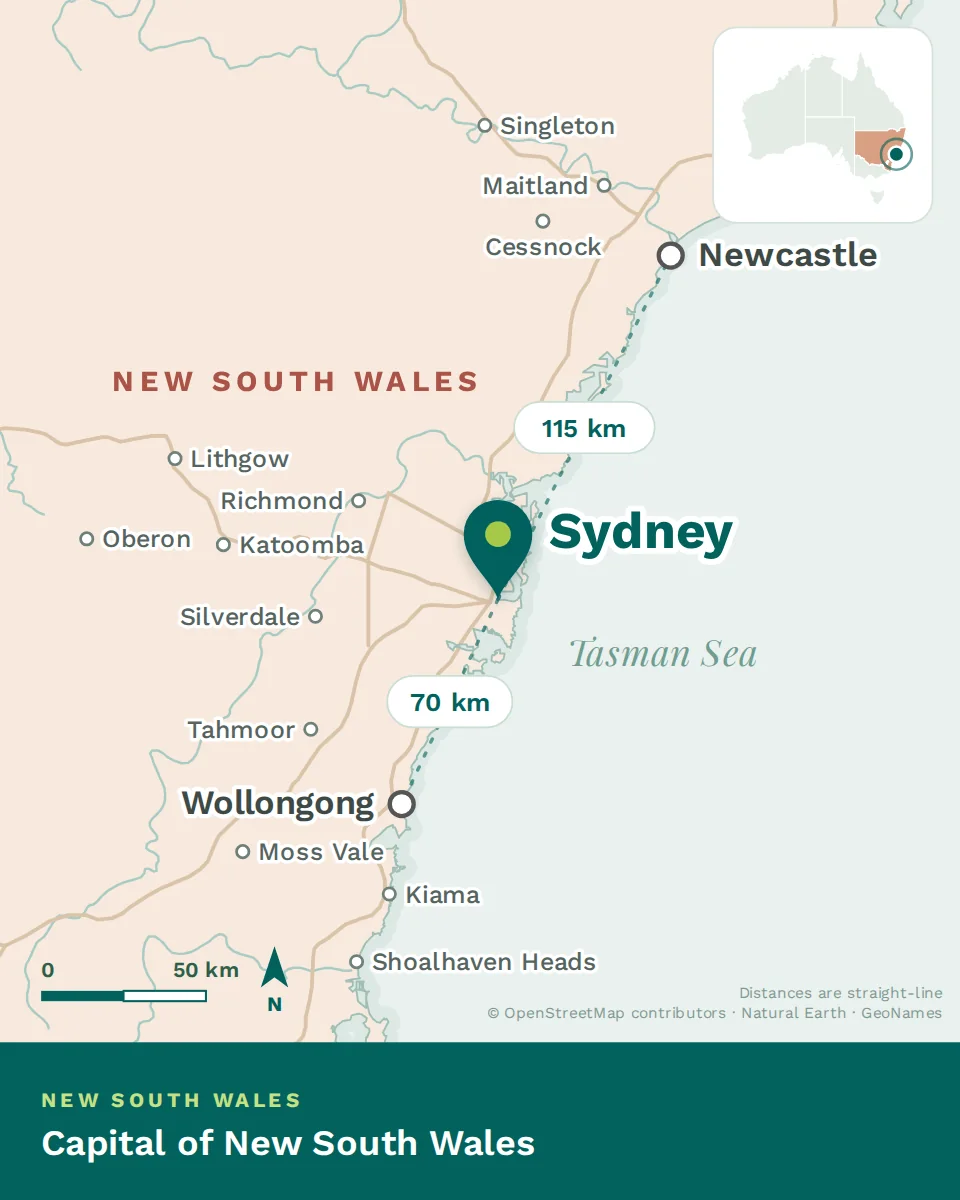
Sydney Airport sits unusually close to the city — about twenty minutes by train from the centre — and is Australia’s busiest international gateway, with a second airport opening in the west. The Melbourne route is one of the world’s busiest air corridors. By road, the Blue Mountains and the Central Coast are an hour, Wollongong an hour and a quarter down a spectacular coast road, and the Hunter Valley about two.