This is the chapter that needs no argument. Four ski fields inside an hour, three glacial lakes, a national park at the end of the road, and the country’s original Great Ride. Whatever else this region asks of you, it delivers here completely.
The number that organises winter
4Ski fields inside about an hour
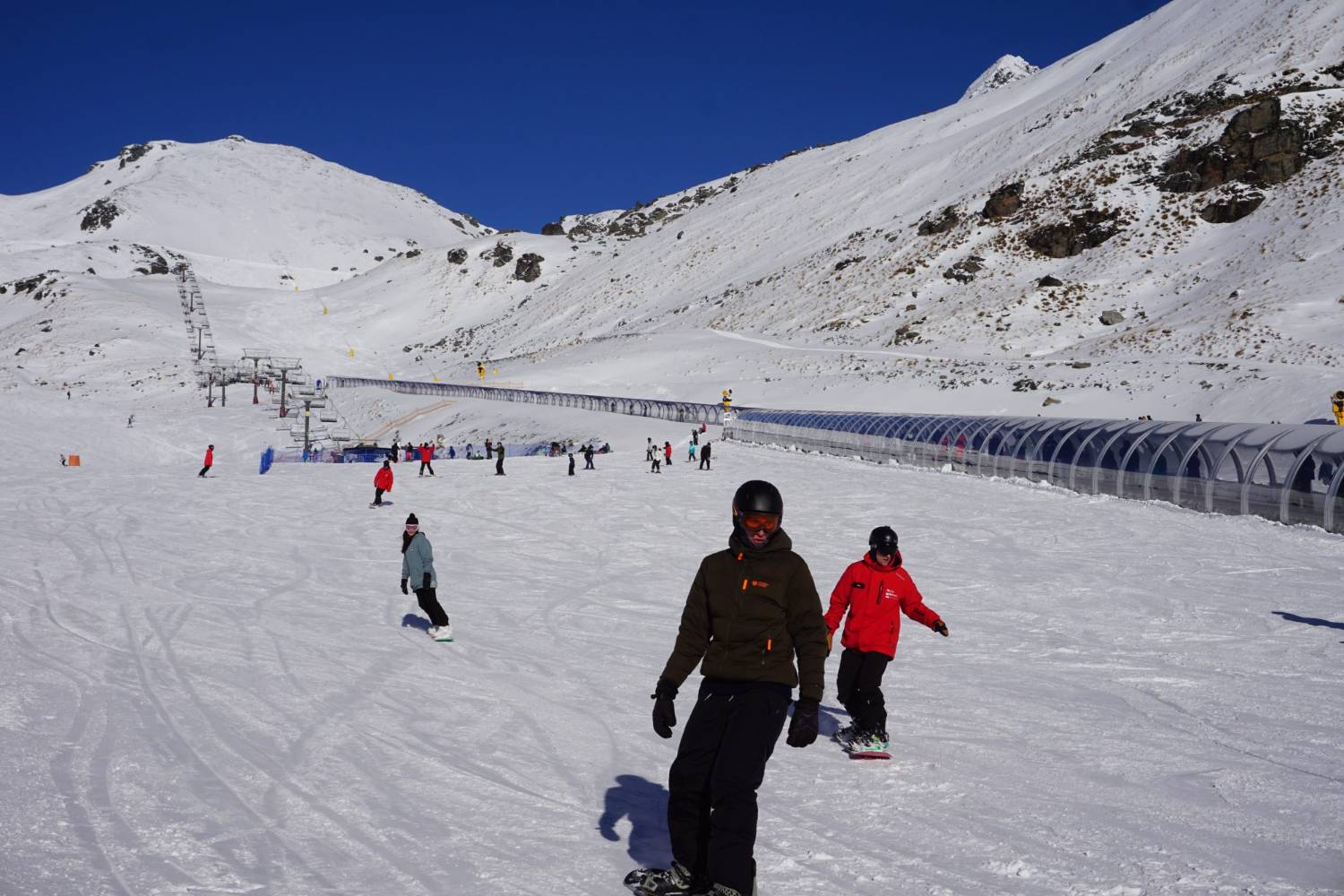
Coronet Peak, the Remarkables, Cardrona and Treble Cone all sit within reach of an ordinary day off — one of them close enough for night skiing after a shift. A season here needs no flights and no accommodation, which changes what skiing costs and, more importantly, what it is: not an annual holiday but a weekly habit.
The detail on each field is below; summer’s lakes, rivers and trails follow it.
Winter
Coronet Peak
Twenty-five minutes from Queenstown, with night skiing. The one you go to after a day shift.
The Remarkables
Above Frankton, up a long access road. Wide bowls, good learning terrain, and the view that ends up in everyone’s photographs.
Cardrona
On the Crown Range between Queenstown and Wānaka. Family favourite, big terrain park, and a good season.
Treble Cone
Wānaka’s field, and the serious one — long steep faces above Lake Wānaka. Advanced skiers plan their winters around it.
Beyond the lifts
Backcountry touring, cross-country at Snow Farm, ice skating and curling at Naseby, and the Pisa and Old Woman ranges for ski touring.
What a season costs
Less than you think once you live here. A pass is a few hundred to fifteen hundred dollars depending on the field, and there is no travel or accommodation to pay for.
Summer — the lakes and the rivers
Wakatipu, Wānaka and Hāwea are deep, cold, clear glacial lakes, and in January they are swimmable. Add Lake Dunstan at Cromwell, which is warmer and shallower and where inland families spend their summers on the water.
Then the rivers: the Kawarau, the Shotover, the Clutha and the Matukituki. Jet boats, rafting, fishing, and gorges of an unreasonable colour. Rock climbing at Wye Creek and Queenstown Hill, paragliding off the gondola, and lake swimming that stays possible into April.
On foot and on two wheels
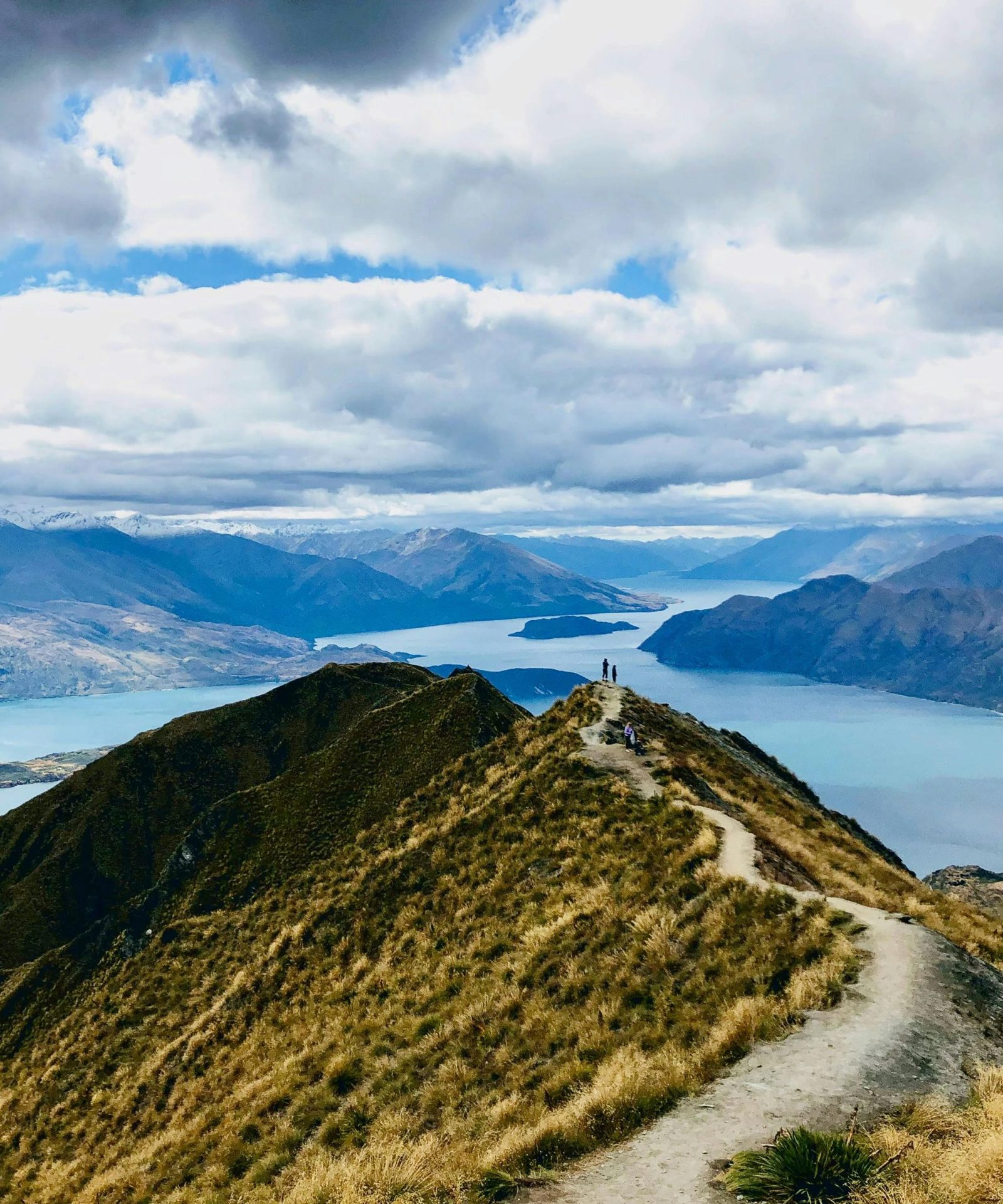
The Roys Peak track above Lake Wānaka
The Otago Central Rail Trail
Clyde to Middlemarch through the Maniototo — New Zealand’s first Great Ride, on an old railway formation. Gentle, remote, and one of the great multi-day rides anywhere.
The Queenstown Trail & Lake Dunstan Trail
Purpose-built riding at its best. The Lake Dunstan Trail from Cromwell to Clyde is spectacular enough to be worth moving here for on its own.
Roys Peak & Isthmus Peak
The Wānaka classics — steep, relentless and worth every step. Go early to have them to yourself.
Mt Aspiring National Park
At the end of the road from Wānaka and Glenorchy. Rob Roy Glacier for a day, the Routeburn and Rees-Dart for longer, and serious alpine country beyond.
Mountain biking
The Queenstown Bike Park off the gondola, Coronet in summer, Sticky Forest at Wānaka, and Bannockburn’s dry-country trails.
Gold trails and thyme country
Bendigo, Bannockburn sluicings and the old workings around Arrowtown and Naseby — walkable history in an extraordinary landscape.
Four ski fields within about an hour
Further afield
Fiordland — 2 hr
Te Anau, Milford and Doubtful Sound. One of the great wildernesses on earth, and a weekend away.
The Catlins & the Southern Scenic Route — 3 hr
Wild coast, waterfalls, penguins and sea lions.
The Mackenzie Country — 2 hr 30
Aoraki / Mount Cook, Lake Tekapo and the dark-sky reserve.
The West Coast — 3 hr
Over the Haast Pass to rainforest, glaciers and the Tasman.
Dunedin — 3 hr
The nearest city, for galleries, gigs, the peninsula’s wildlife and a change of pace.
Australia — direct
Trans-Tasman flights from Queenstown make a long weekend in Melbourne or Sydney practical.
Nine chapters on Central Otago and the Southern Lakes. Everything national — visas, registration, tax, renting, driving, schools, te ao Māori — lives in Moving to New Zealand. If this is the region for you, the next conversation should be about where you’d live — and then what’s open now.