

Auckland has two coasts, forty minutes apart, and they couldn’t be less alike. Knowing which one you want on a given day is most of what there is to learn — and what you do with the rest of the weekend is the reason people move here.
This is the chapter that sells the city, and also the one with the most important safety information in the guide. New Zealand’s west-coast surf beaches are beautiful and dangerous, and the sun here burns faster than almost anywhere you’ve lived. Both are worth reading properly before your first summer.
Two coasts, one isthmus
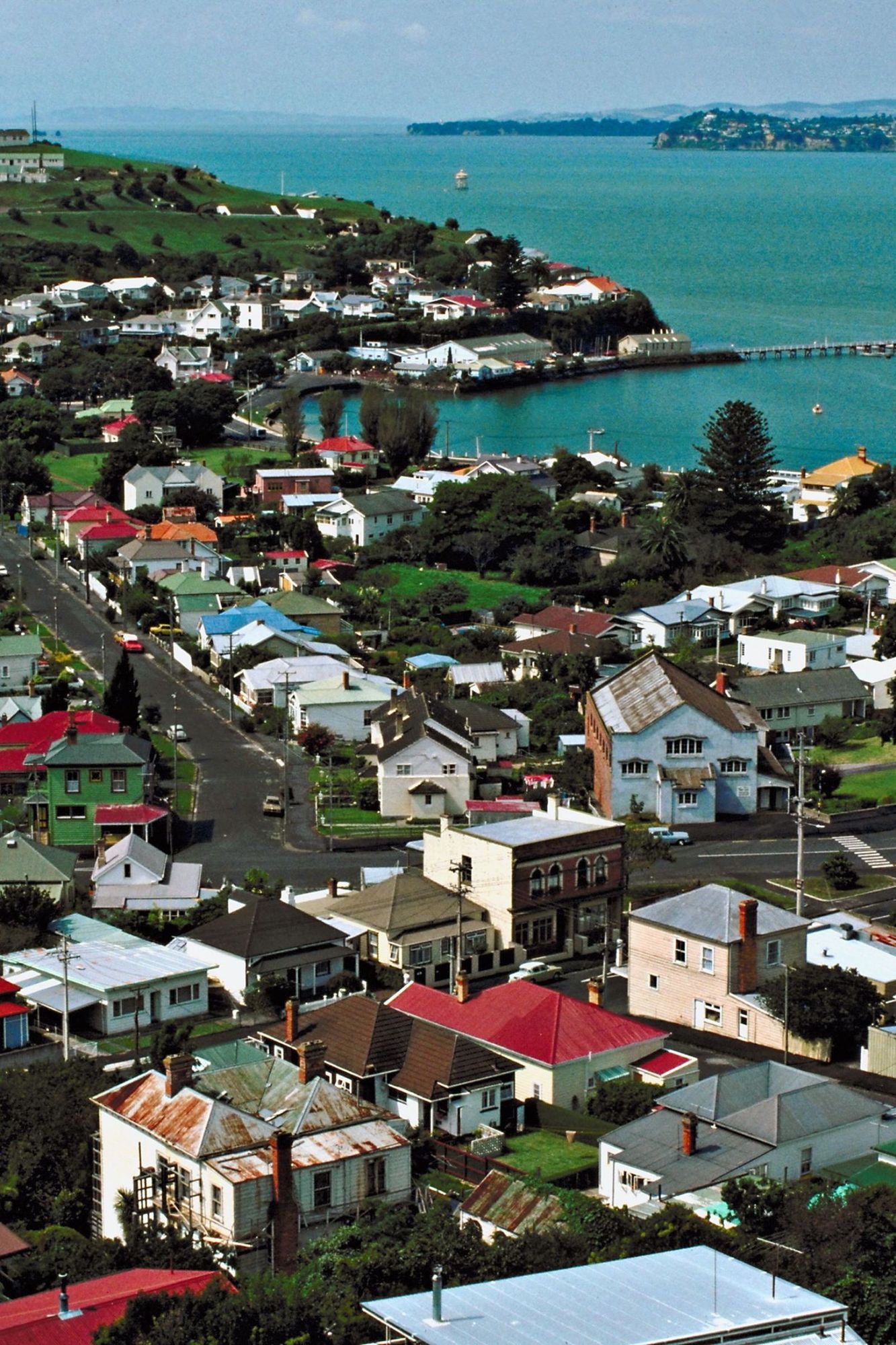
East is the Hauraki Gulf — sheltered, island-scattered, warm and calm. West is the Tasman Sea — black sand, open swell, and nothing between you and Australia. Most Aucklanders use both, for entirely different things.
Find your beach
Choosing by intention works far better than choosing by proximity — the nearest beach is frequently the wrong one for what you had in mind.
Read this before your first west-coast swim
New Zealand has one of the higher drowning rates in the developed world, and the west-coast beaches account for a disproportionate share of it. The water looks inviting and the danger is invisible from the sand — which is precisely the problem.
As a clinician you’ll recognise the pattern: confident adults, unfamiliar environment, no local knowledge, no perceived risk.
- Swim between the flags. They mark the only patrolled, rip-assessed stretch of water on the beach.
- If there are no flags, don’t swim. Unpatrolled west-coast beaches are not a judgement call for newcomers.
- Learn to spot a rip. Calm, darker, flatter water between breaking waves isn’t the safe bit — it’s the current heading out.
- Caught in one, don’t fight it. Float, raise an arm, let it carry you out until it releases, then swim parallel to shore.
- Never swim alone, and never after drinking. Almost every fatality involves one or both.
Surf Life Saving New Zealand publishes daily beach and hazard information at safeswim.org.nz — water quality, rip risk, patrol status, and whether the beach is currently safe at all. Aucklanders check it before they drive out. So should you.
Rainforest, thirty minutes from a hospital car park
Two ranges of subtropical bush sit at either end of the region, and there’s a walking track across the middle of the city itself. None of it requires equipment beyond decent shoes and a raincoat.
- A soil-borne pathogen is killing kauri, the giant native tree the Waitākere Ranges exist to protect. Many tracks are closed, permanently in some cases.
- Scrub your boots, use the disinfectant stations at both ends, and stay on the boardwalk — the spores travel in a gram of mud on your sole.
- Closures change, so check Auckland Council before you set out rather than at the gate.
The gulf is full of islands, and the ferry leaves from downtown
- The UV here is fierce — a thinner ozone layer and cleaner air mean you burn far faster than at the same temperature in Europe.
- It doesn’t have to feel hot. Overcast days in October catch people out routinely.
- Sunscreen, a hat and shade between eleven and four, every summer day. Skin cancer rates here are among the highest in the world, and you’ll see the consequences at work.
“I absolutely love Waiheke Island. We spent my birthday there and visited a couple of the wineries. The vineyards are beautiful and the views are incredible. It’s probably one of my favourite days we’ve had since moving here.”
Here are four versions of an Auckland weekend, and all four are ordinary. Not holidays — the sort of weekend people here have most weeks, in ordinary clothes, with the washing still to do on Sunday evening.
Four weekends, same spine
Costs are indicative for two adults, excluding fuel and anything you’d have spent at home anyway. The point is the shape of the day, not the arithmetic.
Six habits you’ll probably pick up
Not clubs and groups — those are in Finding your people. These are the things people here simply do, that you likely didn’t.
It would be dishonest to end on the beach
There’s a real trade here, and it’s worth naming before you decide rather than discovering in year two. None of these are reasons not to come. All of them are reasons to come with your eyes open.
“The thing that changes is not the weekends. It is that you stop saving them up. In a big northern city a good weekend takes planning and money and a train. Here you can decide at nine on a Saturday morning to drive to a beach, and be swimming by ten, and be home for lunch. It sounds small. It reorganises how a year feels.”