
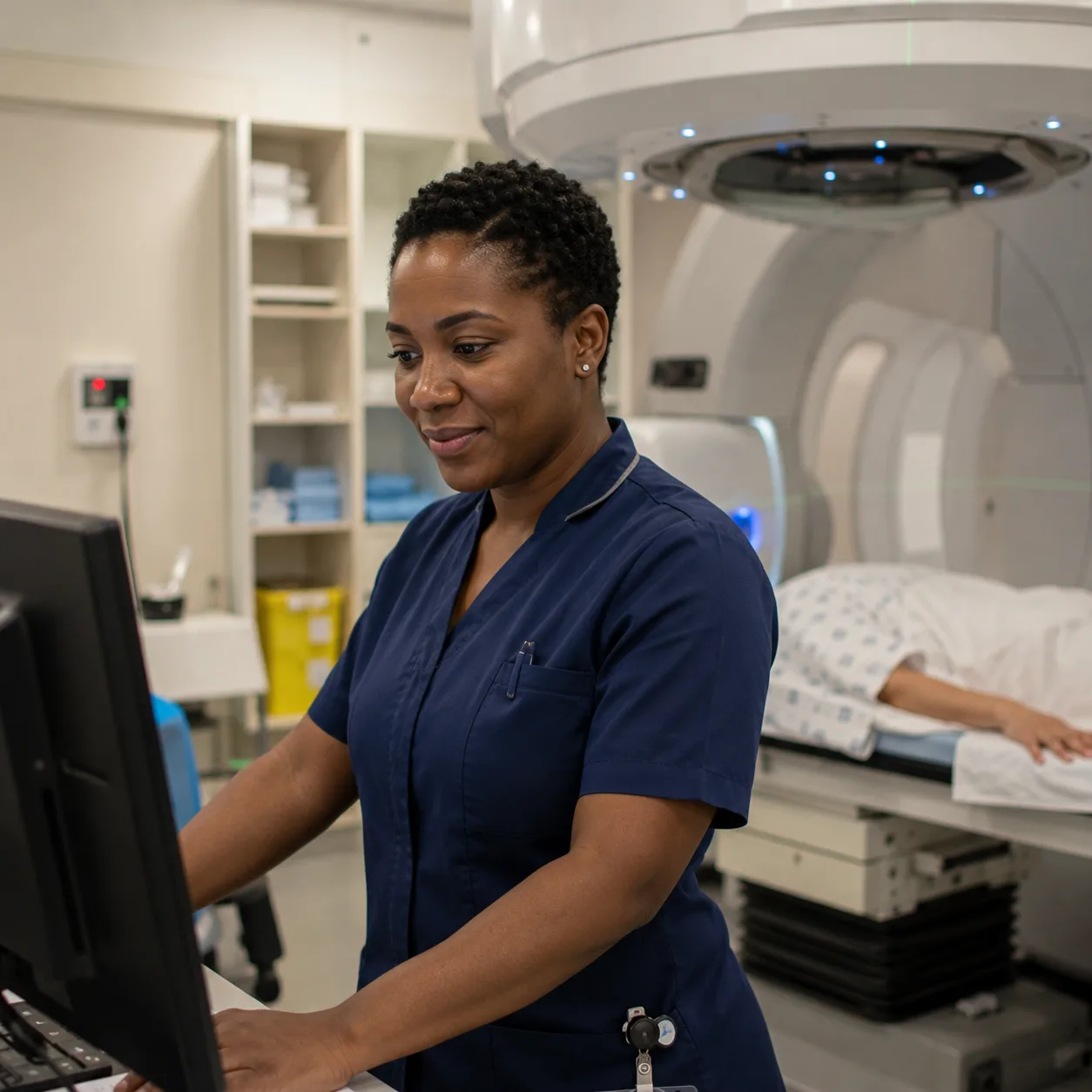
Radiation therapy, where your expertise is valued.
Modern centres, strong teams, meaningful work.
You know every patient on the unit, and they know you.
The treatment itself will feel familiar. What changes is how radiotherapy is organised here: teams are smaller and less segmented than in large overseas services, so therapists move between pre-treatment, planning and delivery rather than sitting in one section for years. You see the same people from CT simulation through to their final fraction.
Equity sits inside the clinical conversation. Māori and Pacific patients experience worse cancer outcomes here, and services are actively organised around closing that gap. Travel and accommodation support, patient navigation and working with whānau are part of the treatment pathway rather than an add-on, and that changes how you plan someone’s course around their life. Expect it to come up in your interview.
Technique range and progression →
Most professions start from the vacancy. This one starts from the map.
There are only a handful of radiation oncology centres in the country, so decide where you want to live first and the shortlist of services follows. The list is short enough to hold in your head, and the location decision is the one that is hard to undo.
- Main centres: larger services, more subspecialisation, students on placement, and a bigger roster to share out-of-hours cover between
- Provincial services: smaller teams, more of the pathway in your own hands, and a shorter distance between you and the people making the decisions
- Timing: options in any given month are counted in ones and twos rather than dozens
These centres are well resourced, and you will know your whole department by name within a fortnight. We tell you what is open, not what we would like to be.
Explore the destination guides →
The essentials, in five minutes
Seven questions people ask before they decide. Open the ones that matter to you.
Can I work there?Yes, with MRTB registration
You register with the Medical Radiation Technologists Board, which assesses your qualification, clinical experience and competency against New Zealand standards, and then hold an Annual Practising Certificate. The catch is not difficulty but document shelf life — certificates of good standing expire, and the Board’s window and Immigration New Zealand’s don’t match, so the order you do things in matters more than the speed.
Check my pathway →What could I earn?Around NZ$79,000–$119,000
Indicative, on the APEX allied health scale. One stepped national scale across the public system — several allied health professions share the same ladder, so location is a lifestyle decision rather than a pay one.
How pay is set →Where are the jobs?A handful of services, nationwide
This is the one profession where you choose the place first. There are few enough radiotherapy services to hold the whole list in your head, and openings in any month are counted in ones and twos rather than dozens — so the location decision, which is the hard one to undo, comes before the vacancy search.
How to choose a location →What will the work be like?You know every patient
The treatment itself will feel familiar. What changes is how radiotherapy is organised here: smaller units, longer relationships with patients through a course of treatment, and in provincial services more of the pathway in your own hands.
The work itself →Can I bring my family?Yes, most people do
Partners and children can usually join you on visas linked to yours, and partners can usually work. Schools, childcare and the family logistics are explained once, properly, in the family guide.
Family moves, explained →What will moving cost?Budget for real fees
Board registration NZ$922 plus NZ$510 for the first practising certificate, document verification and certificates of good standing, visa fees for everyone moving, flights and shipping. Relocation support varies by employer and role — where it exists we confirm exactly what is included in writing.
The move, costed →How long could this take?Several months, in a set order
A work visa first, then the residence pathways. Because Board and immigration document windows differ, sequencing beats hurrying: we map the order with you and review your documents before anything is submitted.
The journey, sequenced →Current opportunities
Roles we’re recruiting for right now. If none is quite right, register your interest and we’ll be in touch when something fits.
The detail, when you want it
Registration, pay, the work itself and life outside it. Everything is here, one section at a time.
At a glanceThe essentials, in twenty seconds
Less choice of city. More of the work you came into the profession for.
Check your registration pathway →See current opportunities →If you’re weighing two countries at once →
Getting registeredRegistration, in brief
Reviewed July 2026 · checked against the Medical Radiation Technologists Board’s current published guidance
You register with the Medical Radiation Technologists Board, which assesses your qualification, clinical experience and competency against New Zealand standards. Once registered you hold an Annual Practising Certificate.
What the Board will typically want to see:
- Verification of your qualification
- Evidence of recent clinical practice
- A certificate of good standing from every authority you have registered with
- A police or criminal-history clearance
- Confirmation of English-language proficiency, if required
Document shelf life is what catches people out. Certificates of good standing and certified copies have a short validity window, and the Board’s window and Immigration New Zealand’s are not the same — so the order you do things in matters more than the speed. We map that sequence with you, and review your documents before you submit anything.
The full detail — both pathways, the document checklist, fees and what to do if something is missing — lives on the registration guide, which is where we keep it up to date.
PayOne national scale, so pay is the same wherever you live
Indicative, on the APEX allied health scale. Where you land depends on assessed experience, and we will tell you which step before you decide anything.
A stepped national scale, the same across the public system. Several allied health professions run the same core ladder, so this is a settlement-wide figure rather than a radiation therapy quirk.
Penal rates and allowances where out-of-hours or weekend cover applies. Set by the agreement, not negotiated role by role.
Annual leave, sick leave and professional development entitlements sit in the agreement rather than varying by employer.
A work visa first, then the residence pathways. Which one applies depends on the role and your circumstances, and we sequence it with you. How visas work
How we verify pay. Every figure we print is read off the collective agreement that covers the role, with the agreement named on the page and its term stated. Where a scale is published in a form we cannot check — a scanned image in an appendix, for instance — we say so and print no band rather than estimate one.
Relocation support varies by employer and role. Where it is available, we confirm exactly what is included before you make any decisions.
Life in New ZealandFewer cities to choose from, and good ones.
A short commute, and the coast or the hills at the end of it.



Cancer services sit in provincial cities and mid-sized centres rather than clustered in one metro area. If you are coming from a large city that can read as a downgrade, and for most people it turns out to be the opposite: the commute is measured in minutes, there is a garden, and the thing you drive to at the weekend is half an hour away rather than three hours.
It also changes what your time off is for. A six-week course of treatment is emotionally heavy work, and having somewhere to put that down properly at the end of a shift is not a lifestyle bonus. It is part of doing this job for a long time.
In a regional city, the mountains are a Saturday trip.

Radiation therapy is the one profession where I tell people to choose the town before the job. There are not many centres, the clinical transition from a comparable system is usually smooth, and the thing that decides whether you stay is whether the place suits the people you are bringing with you.
SophieFounder, Ethicare Resourcing
What we can’t promise
Three things we won’t guarantee, and what we do instead.
Timelines that aren’t ours to give
Registration sits with the Medical Radiation Technologists Board and visas with Immigration New Zealand. We give you the likely range, keep your file complete and moving, and chase what can be chased — but we will not quote a faster number to win you over.
A specific job in a specific city
With a handful of services, the answer is sometimes that the role you want is not open this year. If your heart is set on one place, we will tell you how long that wait could be — before you resign anything, not after.
That the move is right for you
Some moves shouldn’t happen. If the scope, the pay maths or the family logistics don’t stack up, we will say so plainly.
Frequently asked
Does my Australian registration and experience count?
Australian-trained and Ahpra-registered therapists are usually the simplest group to move, helped by the trans-Tasman recognition arrangement between the two countries. It is still an application to the MRTB rather than an automatic transfer, and the Board will want evidence of recent practice. We confirm what applies to you before anything is lodged.
There are so few centres. Will that limit my career?
It limits where you live more than what you do. With a small number of services, your options in any given month are counted in ones and twos, not dozens, and timing matters. What you get in exchange is breadth: rotation across pre-treatment, planning and delivery, and a real say in how your role develops because the team is small enough for that conversation to happen.
Most therapists who move here find their next step is within their service rather than by changing employer — which is a different career shape, not a worse one.
Will I be siloed into planning or into treatment?
Usually the opposite. Most services expect movement across the pathway, and many therapists prefer it. If you want to specialise in planning and dosimetry you can, and there are roles in it, but you will typically keep some delivery work alongside rather than leaving the units entirely.
What are the hours and on-call patterns?
Treatment units run to a daytime list, with extended hours in the larger centres. Palliative and urgent treatment means some out-of-hours or weekend cover in most services, and how that is arranged varies quite a bit between centres.
It is one of the specific things we ask about on your behalf during offer discussions, because the answer differs enough to change how a role feels.
Do I need experience of a particular planning system?
No. Services here use the mainstream planning and record-and-verify platforms you will already have worked with in some form, and they train you on their own configuration. What employers care about is your planning judgement and your patient care, not which vendor’s interface you learned on.
What is the team structure like?
Small and flat. You will work closely with radiation oncologists and medical physicists, often in the same room rather than through a referral chain, and decisions get made faster because there are fewer layers to go through. Therapists arriving from very large departments often say the access to senior colleagues is the biggest single change.
It also means visibility. Good work is noticed here, and so is the other kind.
What do you want your next department to feel like?
Relocating to a new country can feel overwhelming at times, and you won't be doing it on your own. Find your registration pathway in two minutes, then send us your CV and we’ll take it from there.