
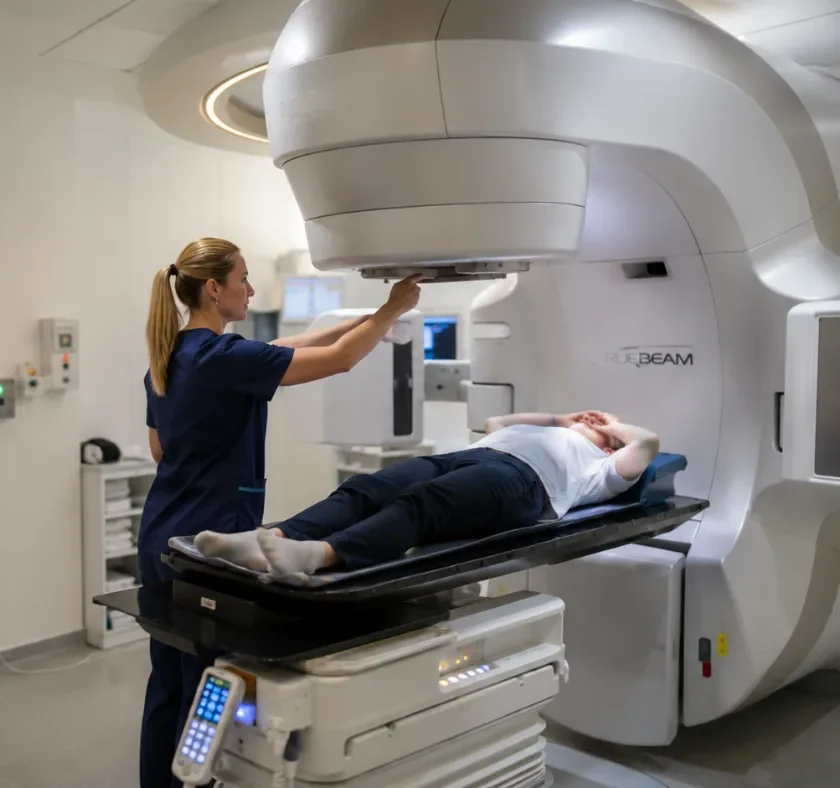
A bigger life. A new radiation therapy career.
Registration is only part of the pathway.
Radiation therapists also need to understand the radiation-use requirements that apply where they work.
Cancer services here are recruiting, and keep recruiting.
Demand for radiation therapists is strong and sustained across Australia’s cancer services — public and private, metro and regional. Departments run modern linear-accelerator fleets and contemporary planning, and one national registration lets you move between states without starting over.
- Strong demand across oncology services nationwide
- A clear comparable-regulator fast lane for UK and Irish training
- National registration recognised in every state and territory
Clinicians move here from across the world — the UK, South Africa, Ireland, the UAE and beyond. Modern planning, real patient continuity, and the coast on your days off: many tell us the move gives back real time without compromising the work.
See current roles →
You follow the patient from planning through to delivery.
Radiation therapists here work across the whole treatment pathway. The core is simulation and pre-treatment imaging, treatment planning, and image-guided delivery on linear accelerators, with patient set-up and reproducibility at the heart of it.
From there the specialisms are real: dosimetry and advanced planning, brachytherapy, SABR and SRS, and specialist tumour sites, or a move into education and research. There is room to specialise as you go.
How registration works →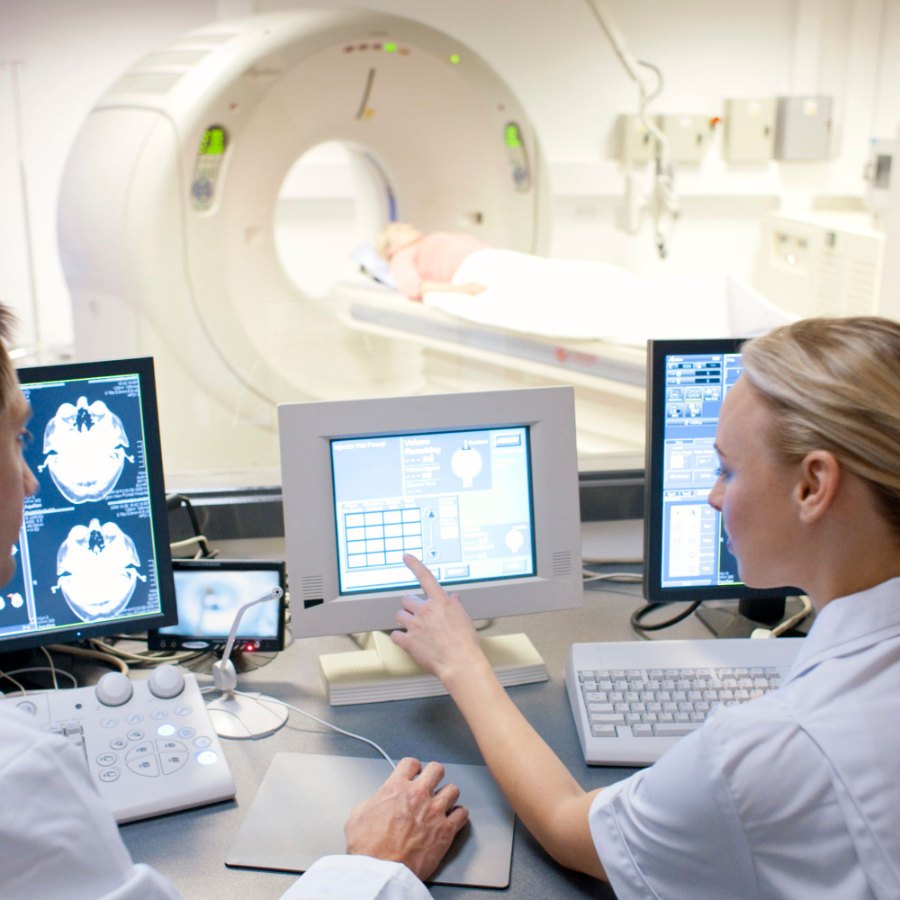
The essentials, in five minutes
Seven questions people ask before they decide. Open the ones that matter to you.
Can I work there?Yes, with Ahpra registration
Radiation therapist is a protected title, so you register in that division with the Medical Radiation Practice Board of Australia through Ahpra — one national registration for every state. UK HCPC therapeutic-radiographer and Irish CORU radiation-therapist programs from 2010, and NZMRTB-accredited programs, inside the Board’s date ranges, are treated as substantially equivalent.
How registration works →What could I earn?Set state by state
Public pay comes from each state’s own public-health enterprise agreement, so the band moves when you cross a border, and the growing private oncology sector sets its own. Superannuation sits on top of base pay. We confirm the figure against the agreement for the actual role rather than printing one here.
How pay is set →Where are the jobs?Sustained demand, metro and regional
Public cancer services and a growing private oncology sector, in the capitals and well beyond them. Radiation therapy is actively recruited, and regional services often move fastest.
See current roles →What will the work be like?Planning through delivery
Simulation and pre-treatment imaging, treatment planning, and image-guided delivery on linear accelerators, with set-up and reproducibility at the heart of it — then real routes into dosimetry and advanced planning, brachytherapy, SABR and SRS, specialist tumour sites, education or research.
The work itself →Can I bring my family?Yes, most people do
Employer-sponsored and skilled routes both carry partner work rights and schooling for children. Schools, childcare, Medicare and the family logistics are explained once, properly, in the family guide.
Family moves, explained →What will moving cost?Budget for real fees
Ahpra registration and annual renewal, a state or territory radiation-use licence, an ASMIRT migration skills assessment where your visa route needs one, visa fees for everyone moving, flights and shipping. Some employers contribute to relocation, some don’t — we get whatever applies confirmed in writing.
The move, costed →How long could this take?Usually several months
Registration and the visa run largely in parallel. The comparable-regulator route is the quickest; a full qualification assessment adds months. Keep three things separate in your head — registration lets you practise, the state licence lets you use radiation, and a skills assessment is only for certain visas.
The journey, sequenced →Current opportunities
Roles we're recruiting for right now. If none is quite right, register your interest and we'll be in touch when something fits.
The detail, when you want it
Registration and pay, in full. Everything is here, one section at a time.
Getting registeredRegistration overview
Reviewed July 2026 · checked against the Medical Radiation Practice Board of Australia’s current published guidance
Radiation therapist is a protected title, so you register in that division with the MRPBA through Ahpra. Keep one distinction clear: registration lets you practise, while a migration skills assessment (via ASMIRT) is a separate process for certain visas.
Whether your route is quick or involves extra steps depends on how the Board recognises your qualification. You'll typically be assembling:
- Your radiation therapy qualification and full academic transcript
- Clinical-placement evidence, where required
- Registration history and a current Certificate of Good Standing
- English-language evidence, where the standard requires it
Pathways into registration
Your route depends first on whether the Board already recognises your qualification.
Comparable-regulator fast lane
Programs approved by the UK's HCPC (therapeutic radiographers) and Ireland's CORU (radiation therapists) from 2010, and NZMRTB-accredited programs, within the Board's date ranges, are treated as substantially equivalent.
Qualification assessment
Otherwise the Board assesses your qualification against the Australian radiation-therapy standard. Where gaps remain, the outcome may direct you to the National MRP examination or a period of supervised practice.
Your registration resources
We've a complete radiation therapist registration guide and checklist for Australia. Our team can walk you through the Board's "Is my qualification recognised?" pathway, the National exam (if it applies), and the visa route for your situation.
Prefer a download? Registration guide · Checklist
Pay & benefitsStrong demand, strong pay
Public pay is set state by state, and the growing private oncology sector sets its own. We’ll confirm the figure for the actual role before you commit.
Enterprise agreements
State-based public-health agreements set base pay and progression. We confirm the current band, verified against the agreement, for each role.
Large & competitive
A very large private imaging sector with high volumes — often strong earning potential, especially with CT/MRI skills.
On top of base
Overtime, on-call and after-hours loadings, and higher-duties where relevant — confirmed per role.
Varies by employer
Varies by employer and role — some contribute towards the move, others don’t. We ask directly and get whatever applies confirmed in writing before you decide.
Skilled & sponsored
Employer-sponsored (482) and skilled routes, with partner work rights and schooling for children. We support the candidates we place through the visa process.
4 weeks + super
Four weeks' annual leave is standard, plus compulsory superannuation (employer retirement contributions) on top of pay.
Figures are intentionally not stated here until they're verified for your specific role against the relevant agreement or award. Ask us for current pay for where you'd be working.

Radiation therapists are wanted right across Australia's cancer services — so the question isn't whether you'll find work, but what kind of working life you want.
If you trained in the UK or Ireland, the comparable-regulator route makes registration simple, which surprises a lot of people. Add modern linac fleets, real patient continuity and the climate, and it's an easy life to picture.
Tell me what you're after — a planning or dosimetry focus, a regional lifestyle role, more time at the weekend — and I'll work to find a role that fits it, rather than the other way round.
SophieFounder, Ethicare Resourcing
What we can’t promise
Three things we won’t guarantee, and what we do instead.
Timelines that aren’t ours to give
Registration sits with the Medical Radiation Practice Board (Ahpra) and visas with the Department of Home Affairs. We’ll give you the likely range, keep your file complete and moving, and chase what can be chased — but we won’t quote a faster number just to win you over.
A specific job in a specific suburb
Vacancies move. If your heart is set on one workplace in one corner of one city, we’ll tell you plainly how long that wait could be — before you resign anything, not after.
That the move is right for you
Some moves shouldn’t happen. If the scope, the pay maths or the family logistics don’t stack up, we’ll say so plainly.
Frequently asked
Do I need an ASMIRT assessment to register?
Not generally. The MRPBA assesses your qualification for registration; ASMIRT carries out migration skills assessments tied to certain visas (most often the points-tested 189, 190 and 491). On an employer-sponsored 482, an ASMIRT assessment generally isn't required just to register — but it may be needed for other migration routes. We'll confirm what applies to you.
Will my UK or Irish qualification be recognised?
Often, yes — UK therapeutic-radiographer programs approved by the HCPC and Irish radiation-therapist programs approved by CORU, from 2010 and within the Board's date ranges, are treated as substantially equivalent. NZMRTB-accredited programs are recognised too. Your qualification must match the Board's listed division, institution, title and award year.
Will I have to sit the National exam?
It depends on your assessment. Applicants recognised via a comparable regulator are generally exempt; otherwise the exam has a common Part A plus a division-specific Part B, set in the Australian context. Don't assume either way — your assessment confirms it.
Is registration the same as a radiation licence?
No. MRPBA registration is national and lets you practise; using radiation is licensed separately by each state or territory. You may need both — your employer usually helps with the local licence.
Where would you like to take your planning and treatment skills?
Relocating to a new country can feel overwhelming at times — and you won't be doing it on your own. Find your registration pathway in two minutes, then send us your CV and we’ll take it from there.